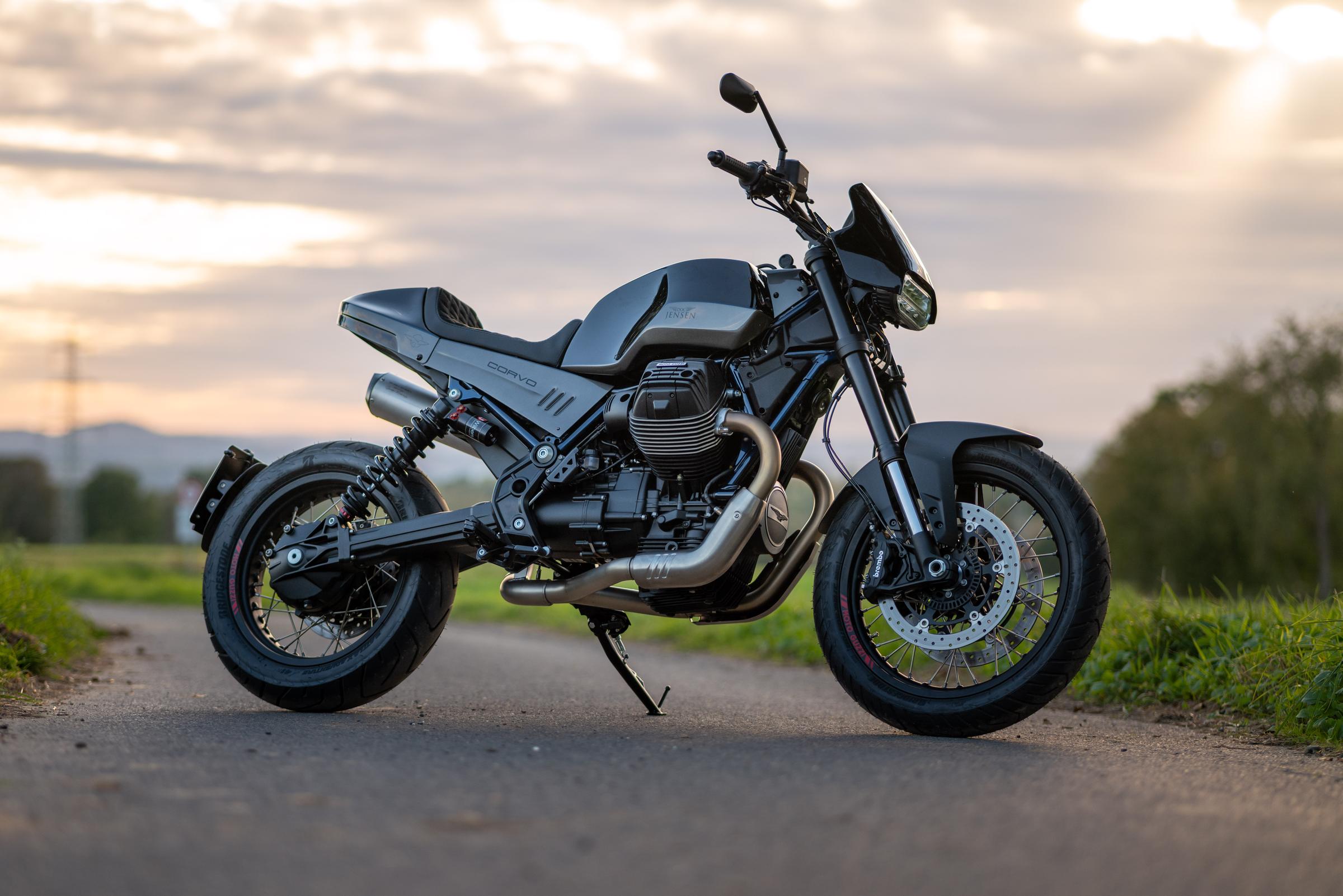
Three years of work, countless details and one clear idea. The Corvo shows what happens when an architect doesn’t simply customise a Moto Guzzi V85, but rethinks its design from the ground up.
Lines that start somewhere and lead nowhere.
Look closely at a modern motorcycle and you will often find a surprising amount of visual clutter beneath the tank, fairings and add-on parts. Technical necessities meet plastic covers – and at the end of the day, the whole thing above all has to be mass-producible.
Jörg notices these things. Probably more often than any motorcycle owner would like. He is an architect, so proportions, lines and the interplay of surfaces and volumes matter to him.
He liked the Moto Guzzi V85 as a technical base. But he was convinced that a completely different motorcycle was hiding inside it. So he didn’t start with an accessories catalogue, but with a pencil: away with everything that made the form needlessly restless. It was to look lighter, clearer, more of a piece.
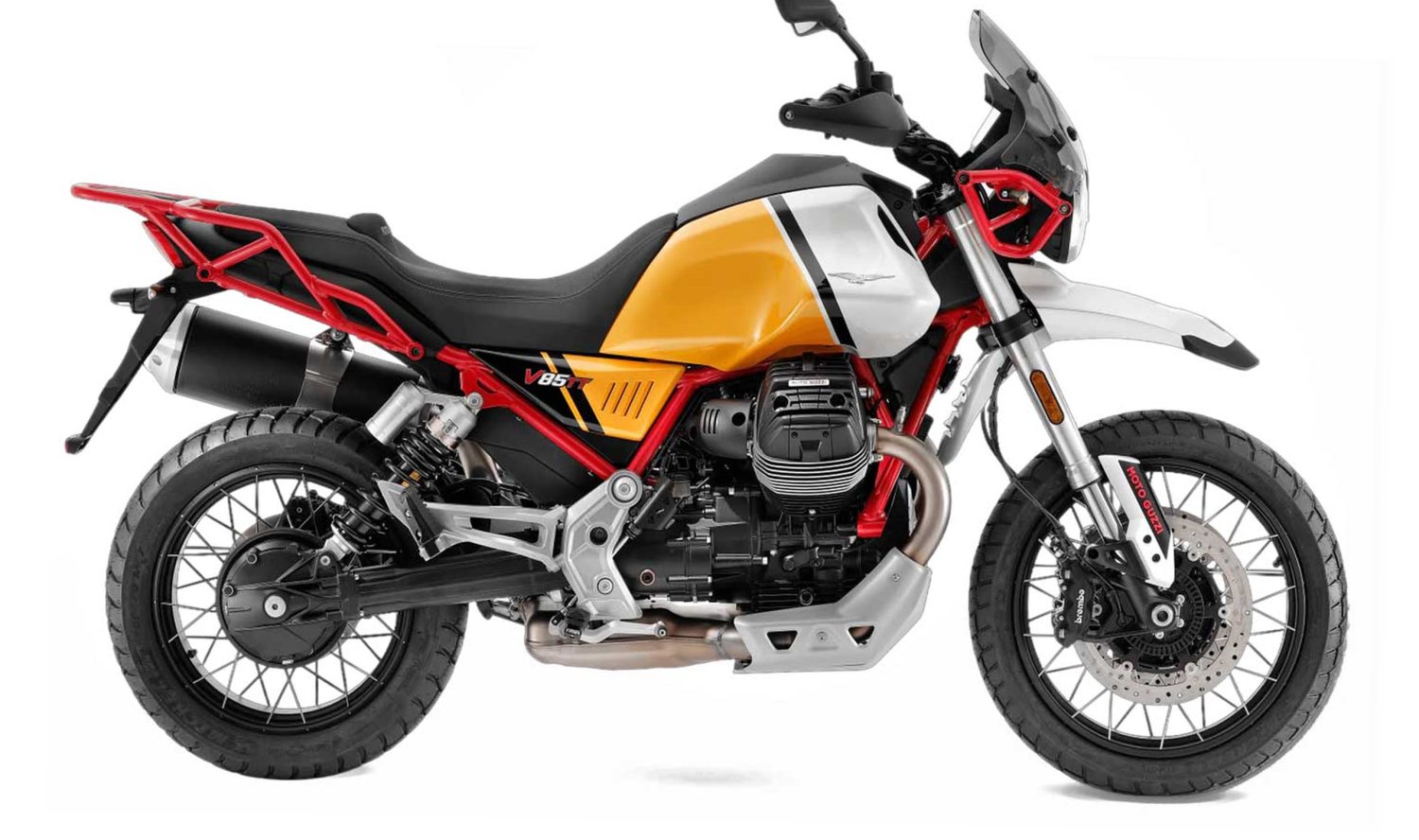
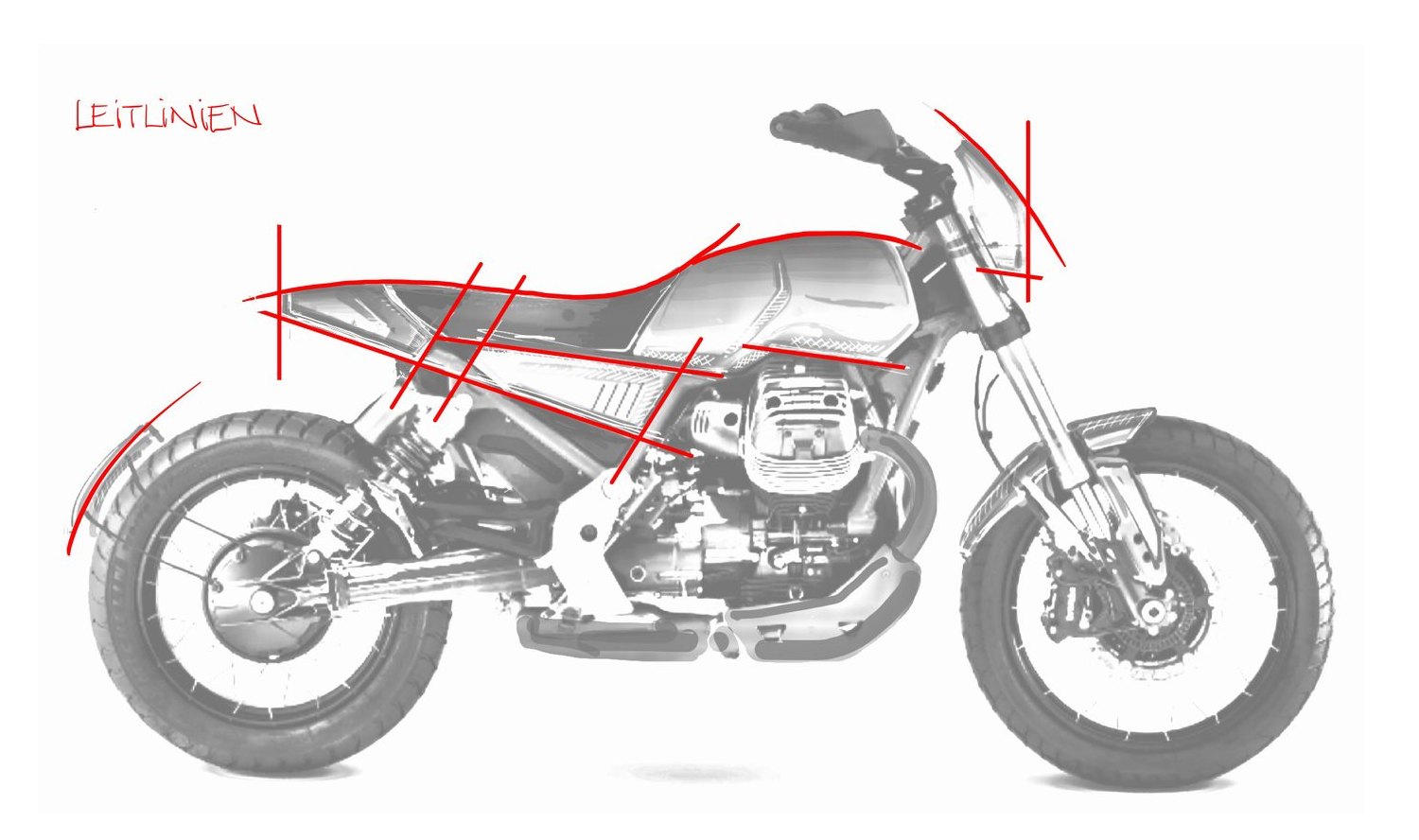
The starting point is the original Moto Guzzi V85. A good motorcycle – but with many lines that have nothing to do with one another.
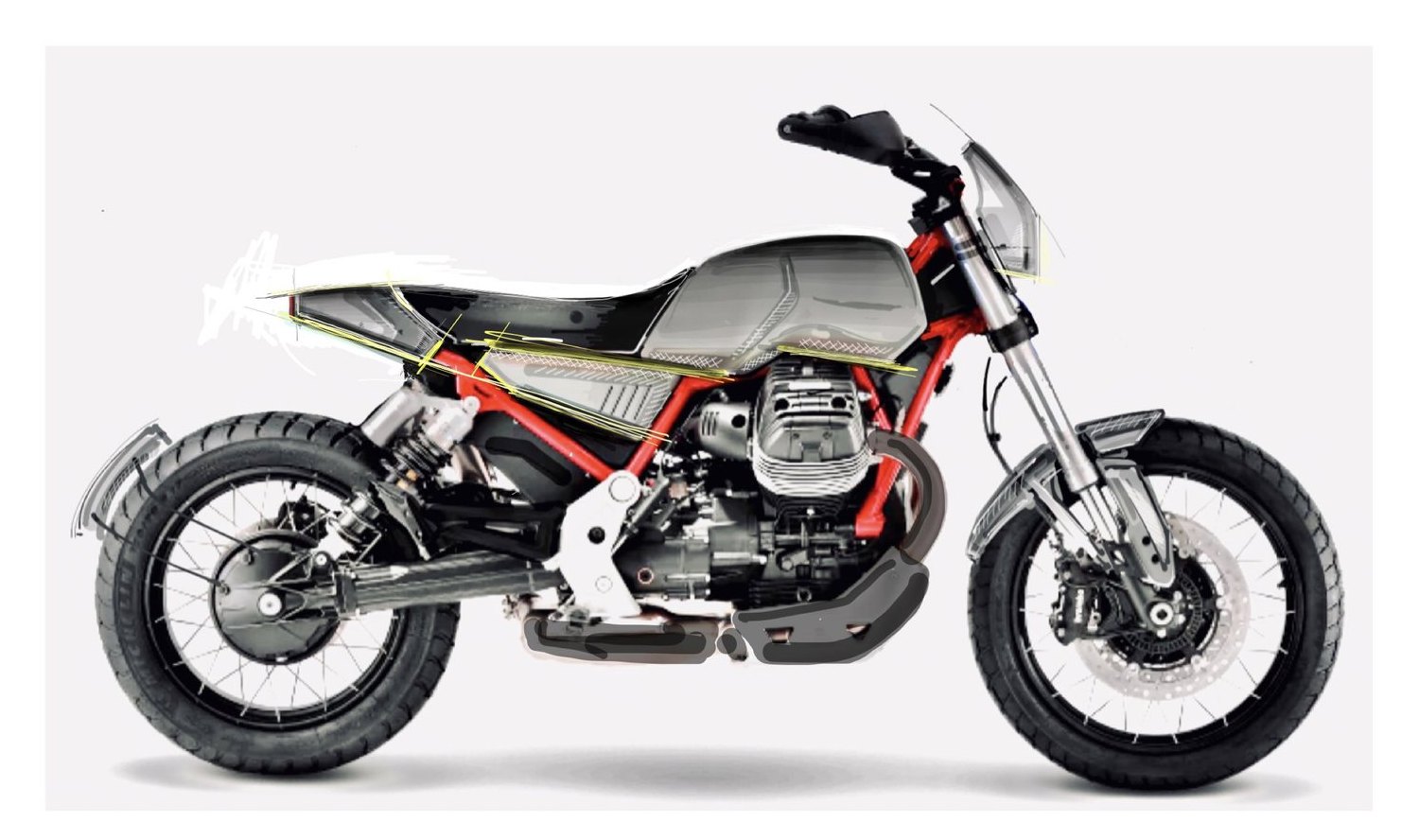
The stock V85 on the drawing sheet. This is where the pencil work begins.
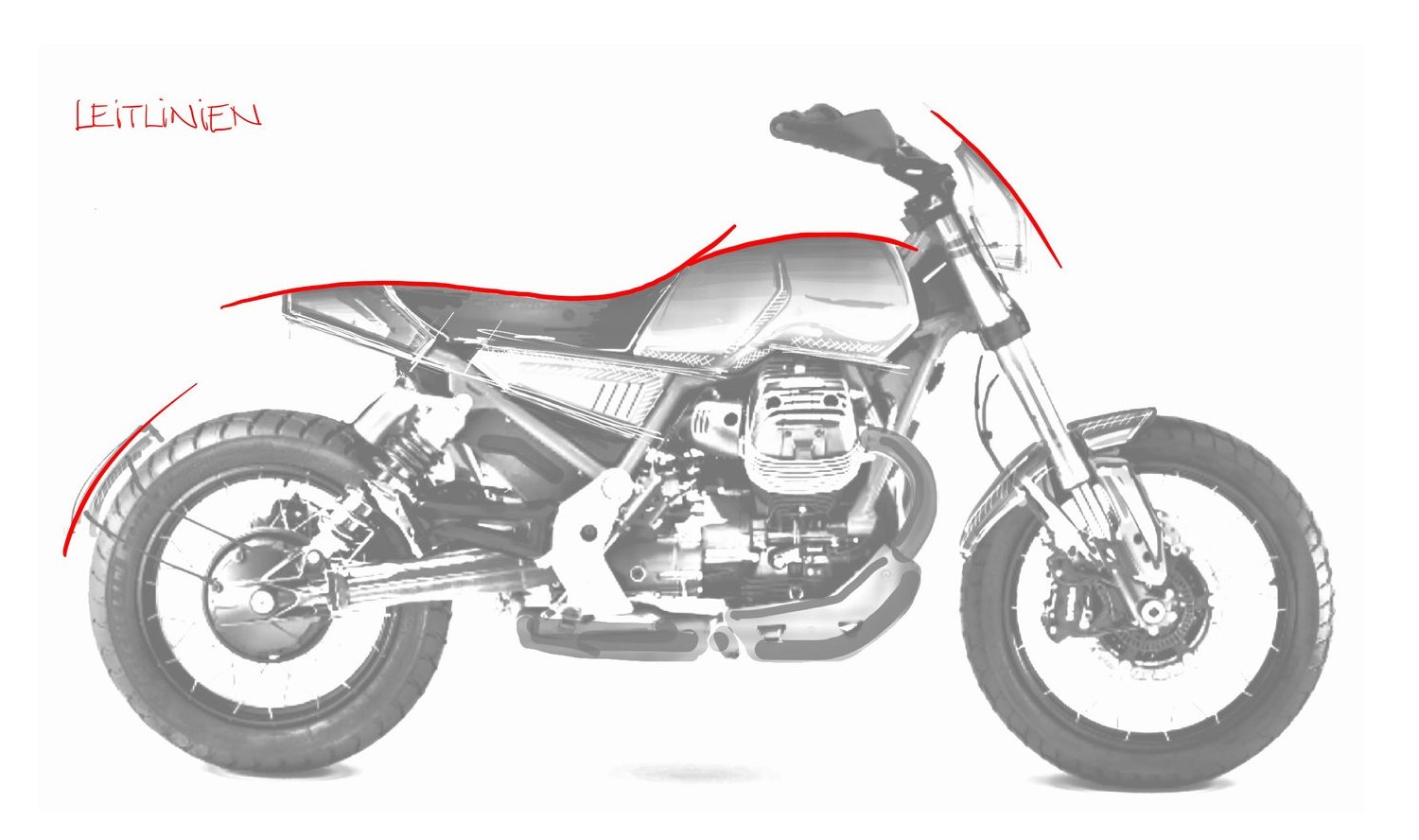
The silhouette: one top line running from the tail over seat and tank to the windscreen.
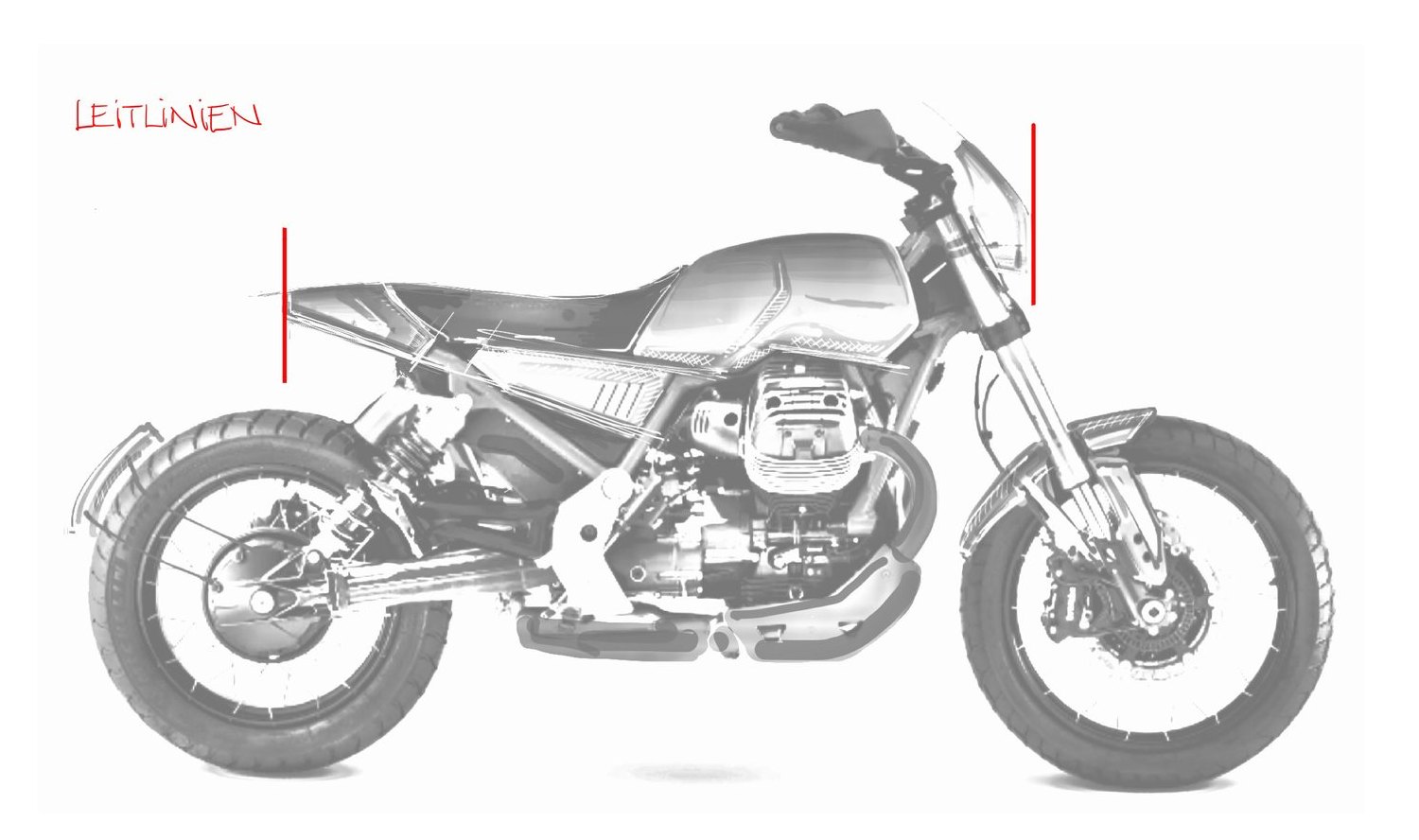
Two verticals mark where the body begins and ends.
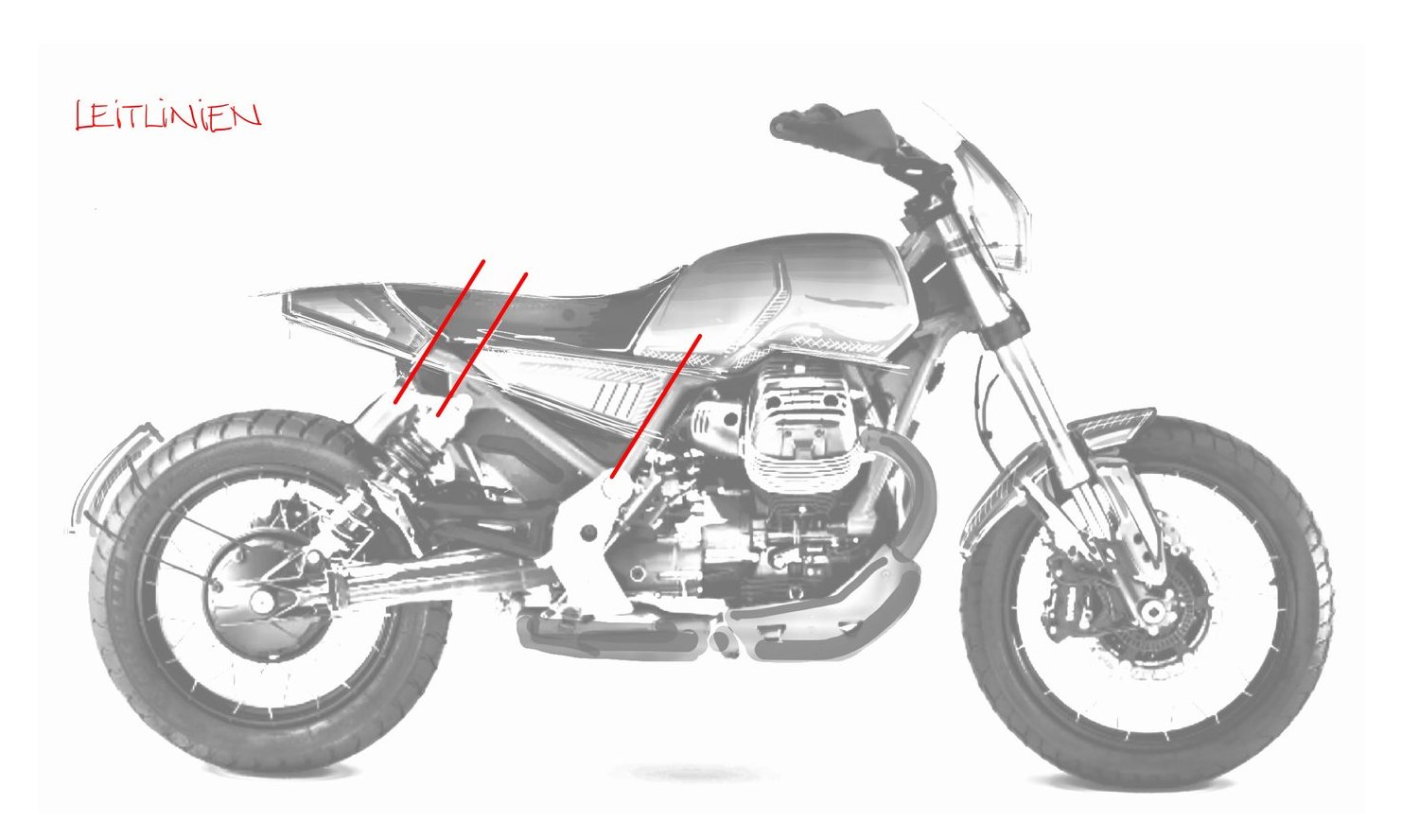
Diagonals give the side covers direction and tension.
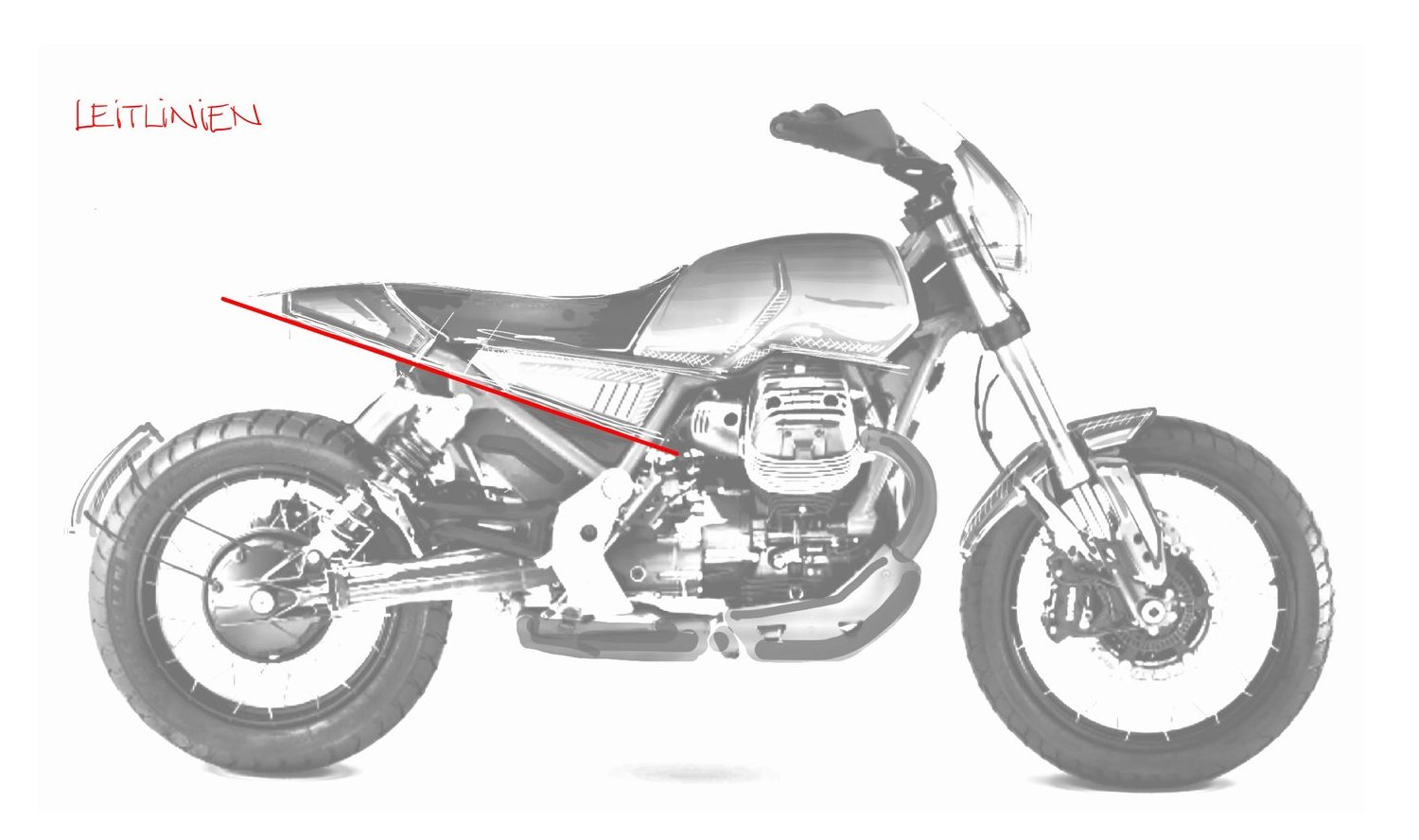
A continuous lower edge connects tail and engine.
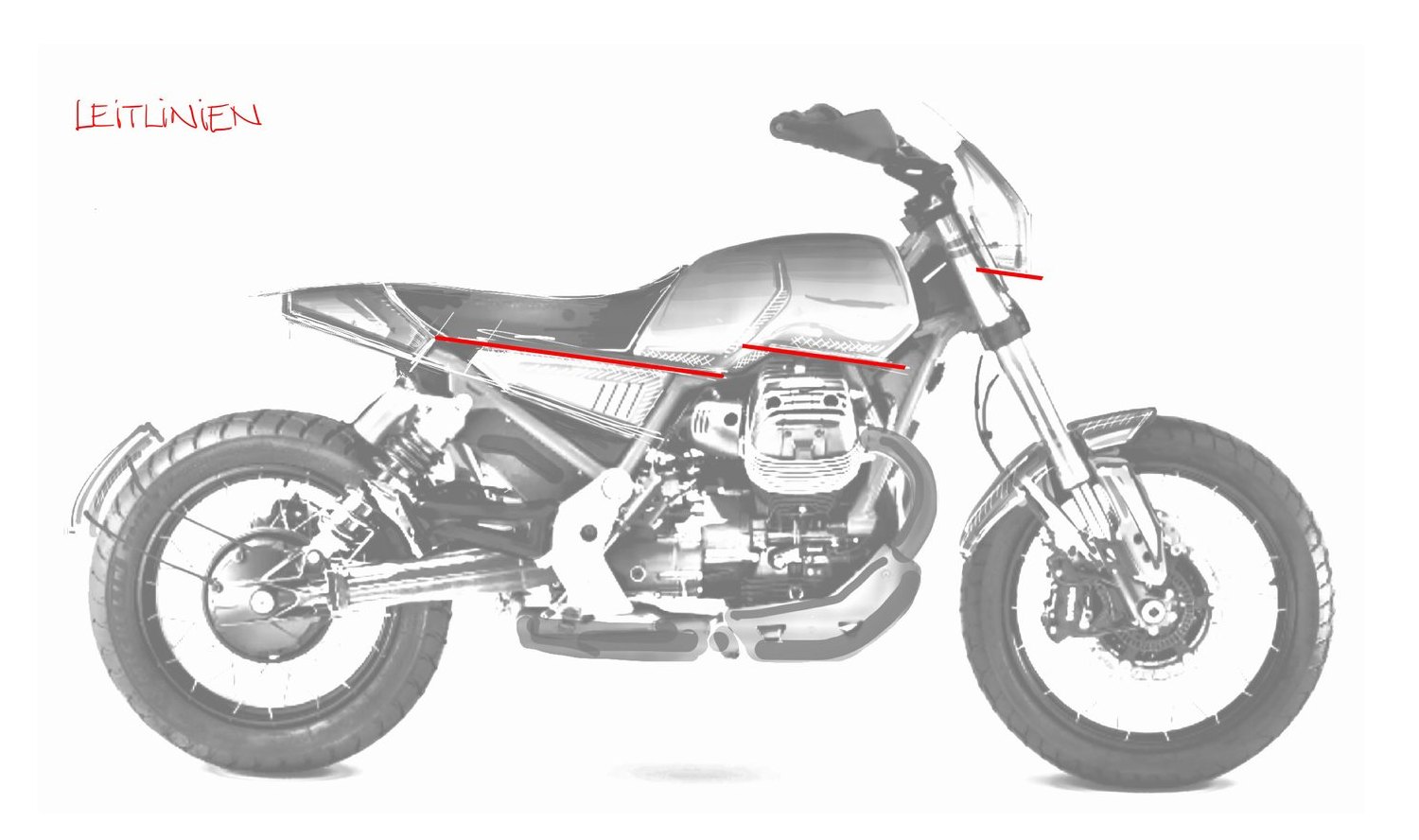
The joint between tank and side cover becomes a line in its own right.
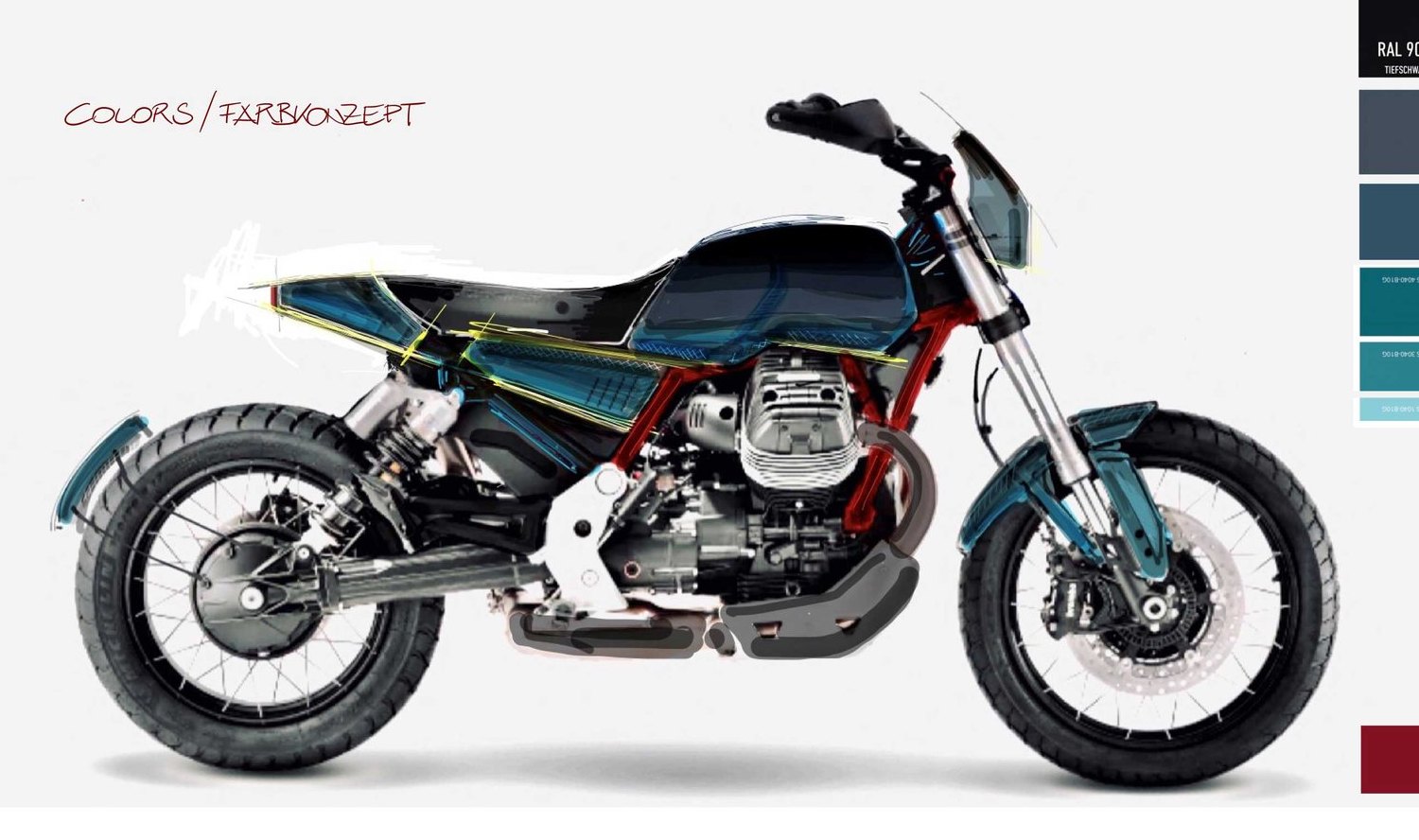
Together, all the lines form the framework of the Corvo. Not customised – re-proportioned.
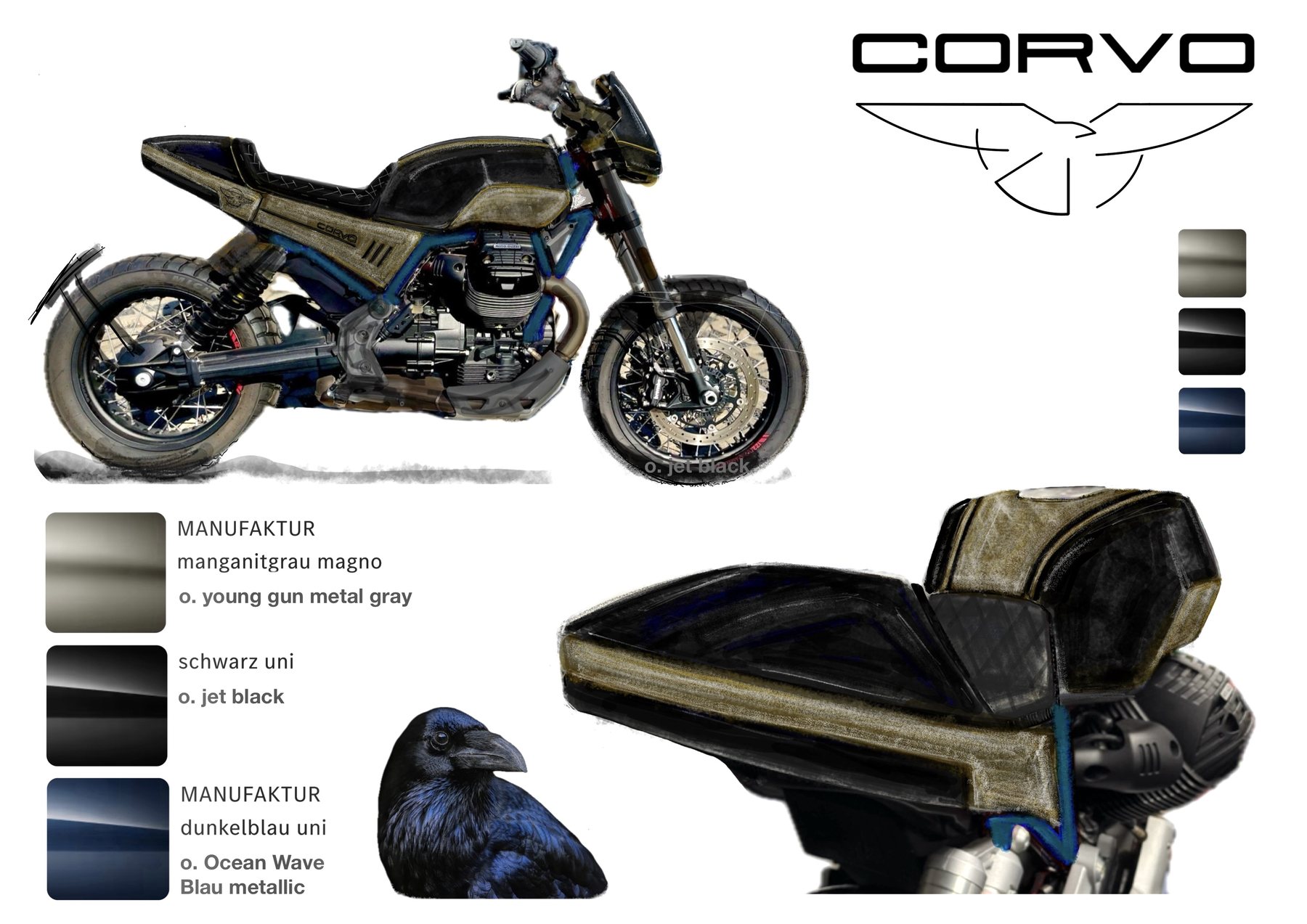
Only then does colour come into play: black with a deep blue.
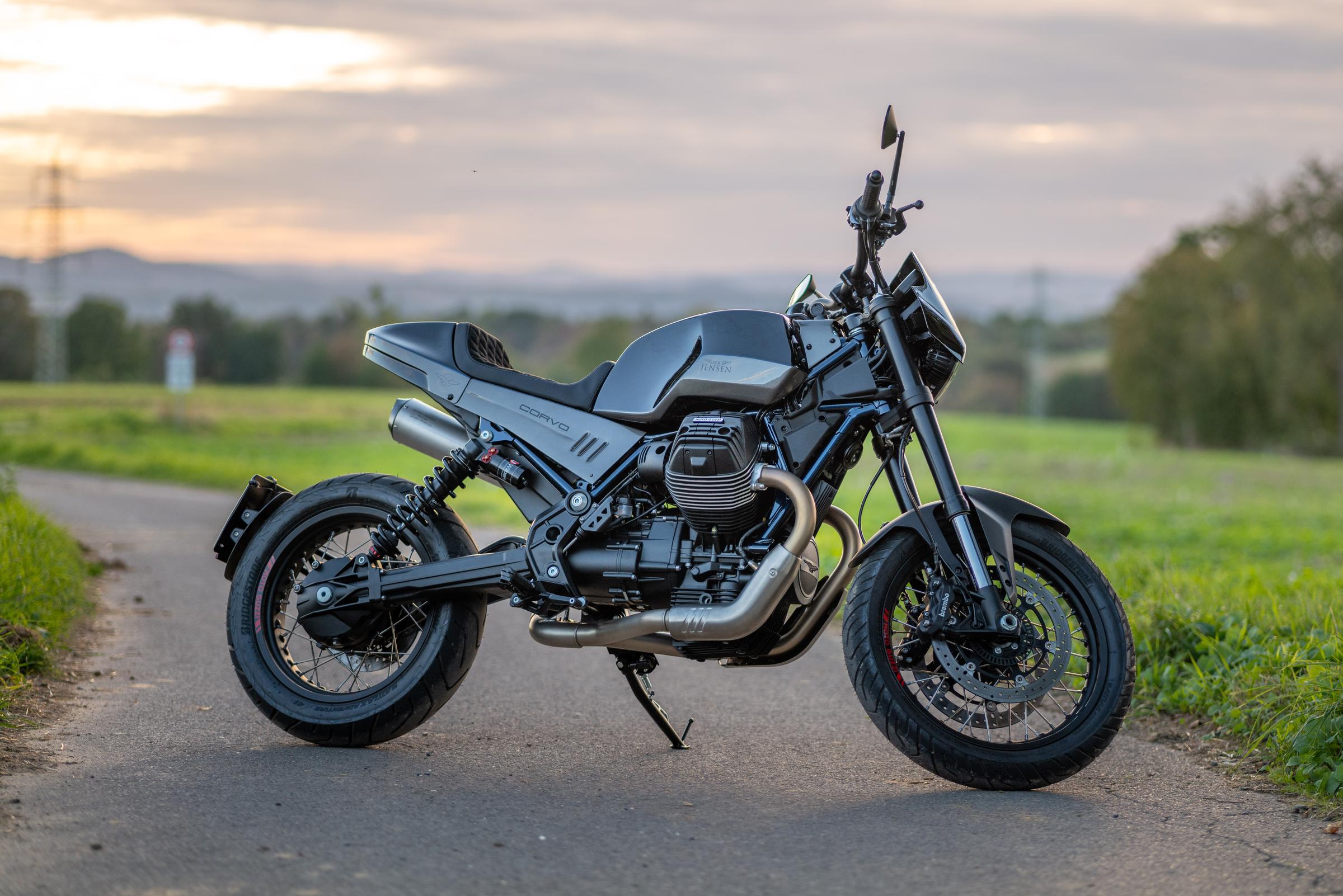
On one side, the architect who thinks in surfaces. On the other, the customiser who brings all the trades together.The Corvo was born of this tension
A Guzzi called Crow.
“Corvo” is Italian for crow – and it fits remarkably well into Moto Guzzi’s history. Time and again, the brand has given its motorcycles the names of birds.
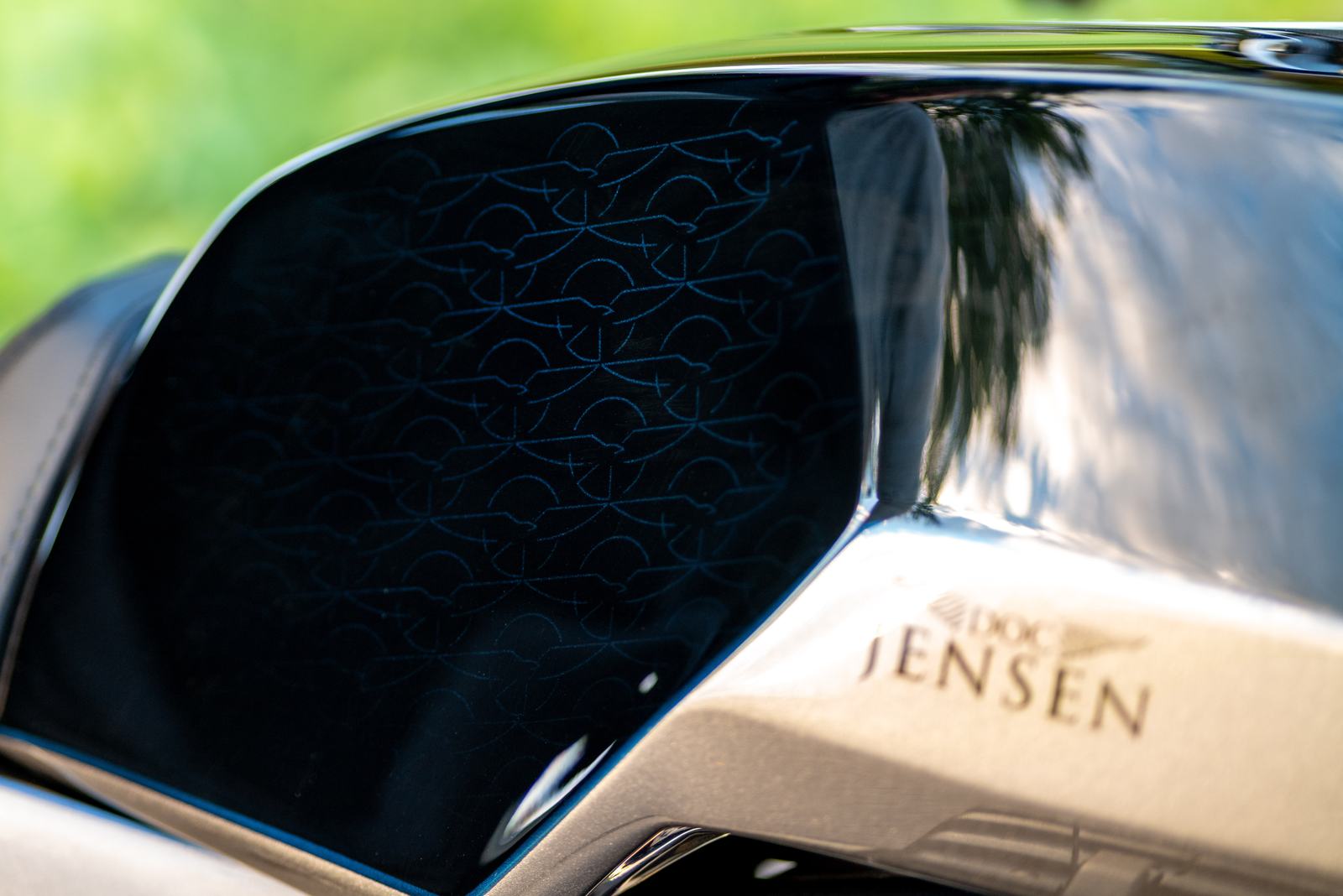
For Jörg, there was something personal too. Crows have fascinated him for a long time: their intelligence, their presence and that jet-black plumage which, in the right light, suddenly shimmers blue, violet or metallic. That was exactly the effect he wanted on the motorcycle.
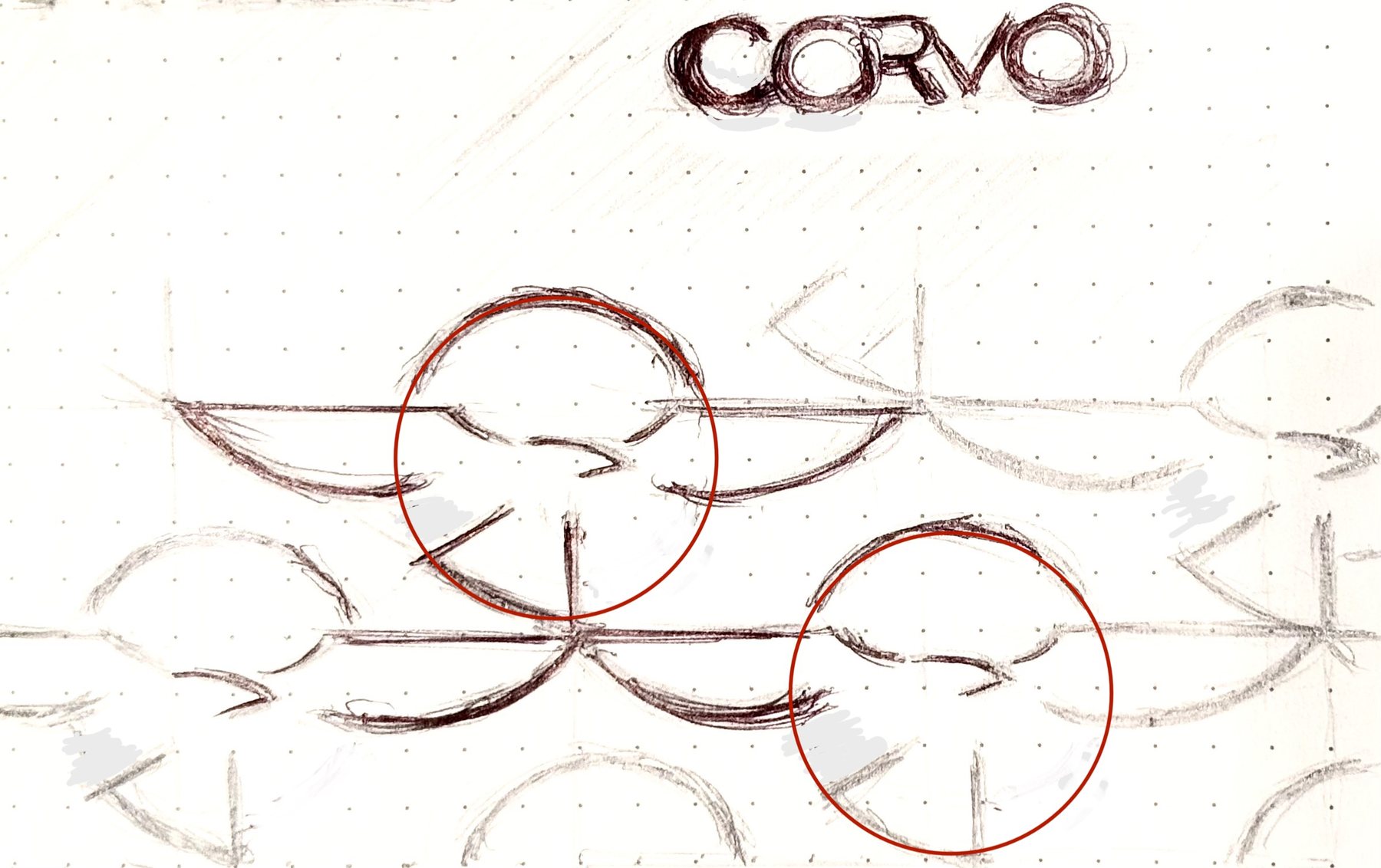
So Jörg also designed a logo of his own. Rather than sitting on the tank as loud decoration, it forms a fine repeat pattern in the paintwork. Only on closer inspection does the pattern reveal itself.
Aluminium, not plastic.
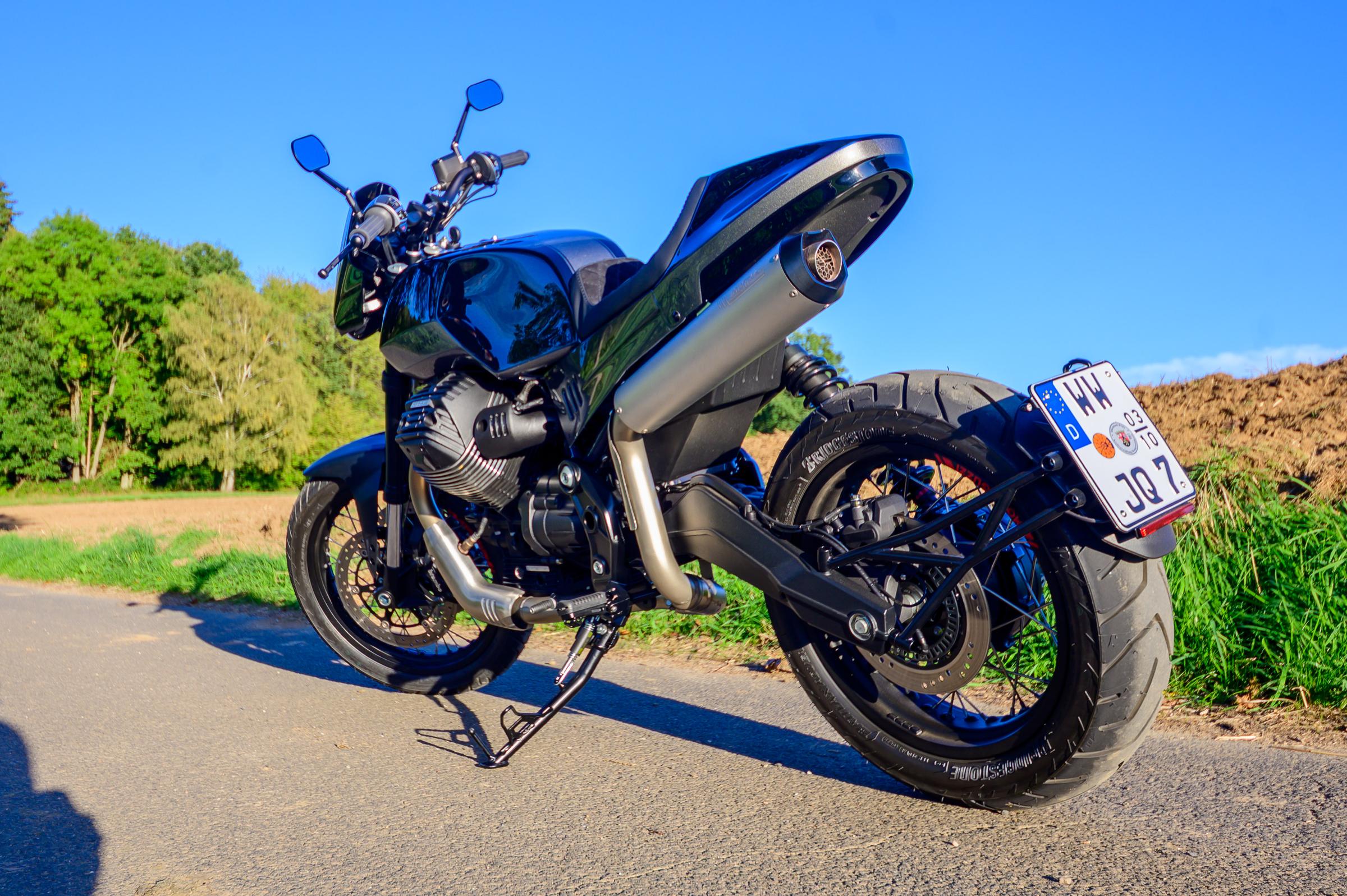
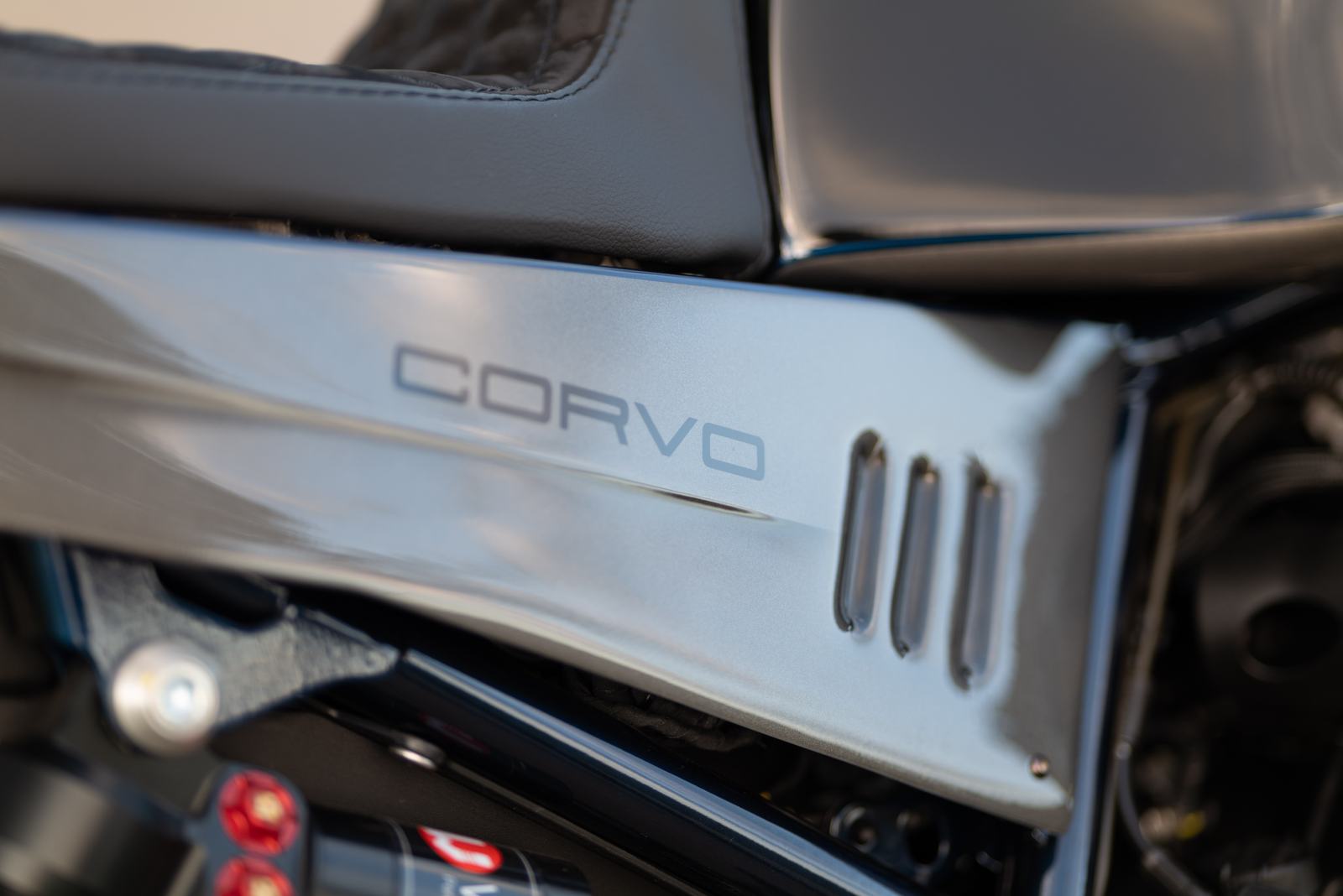
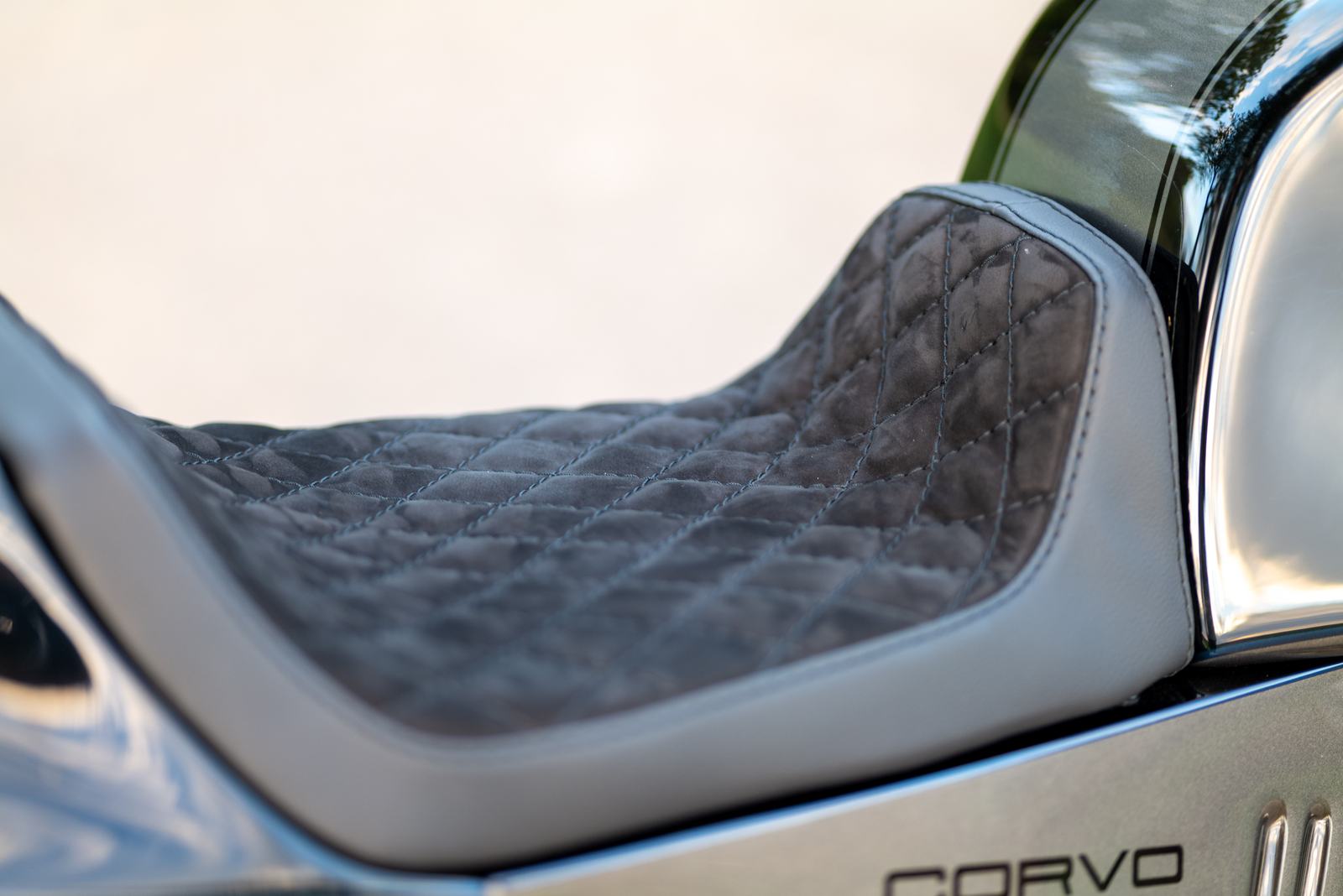
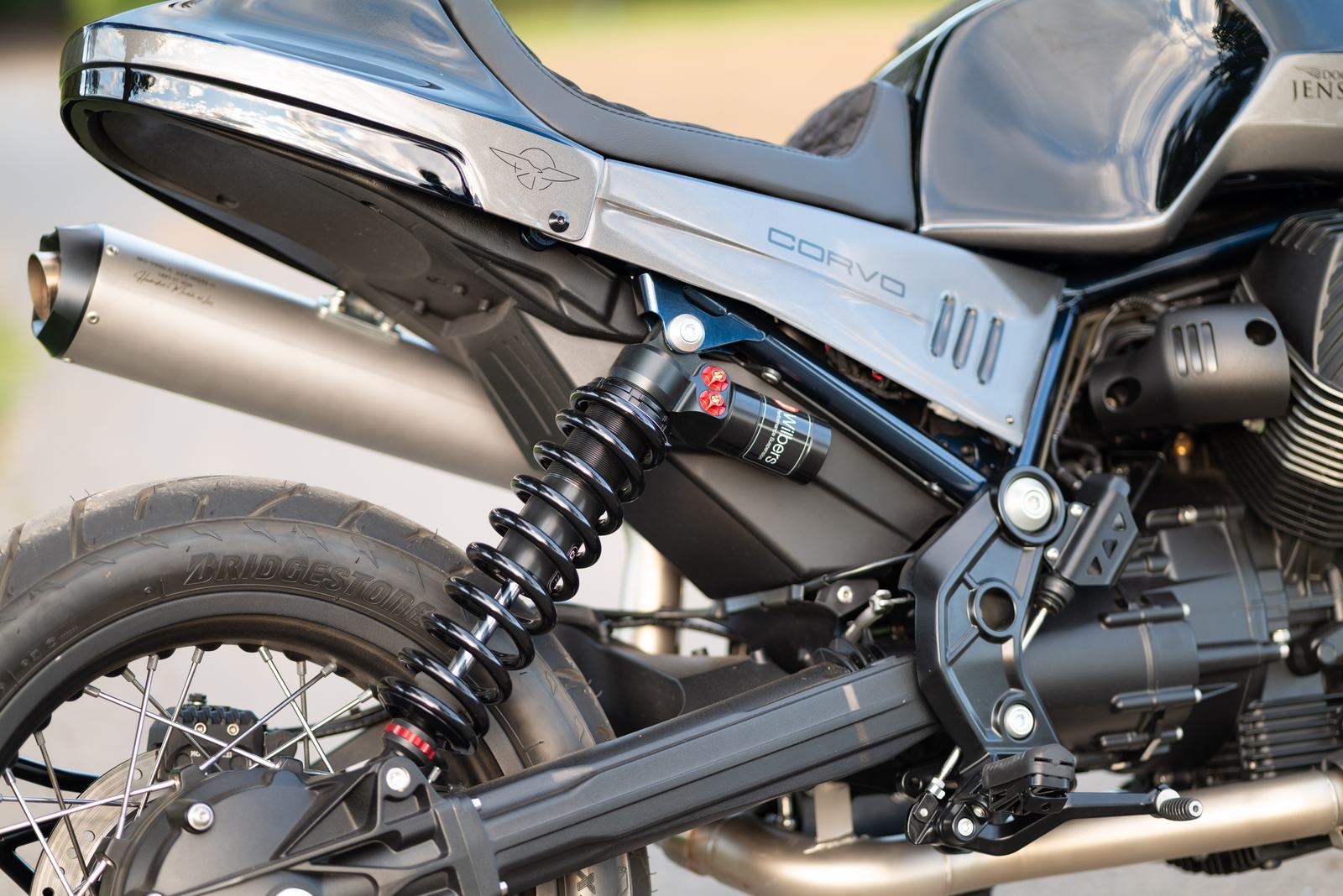
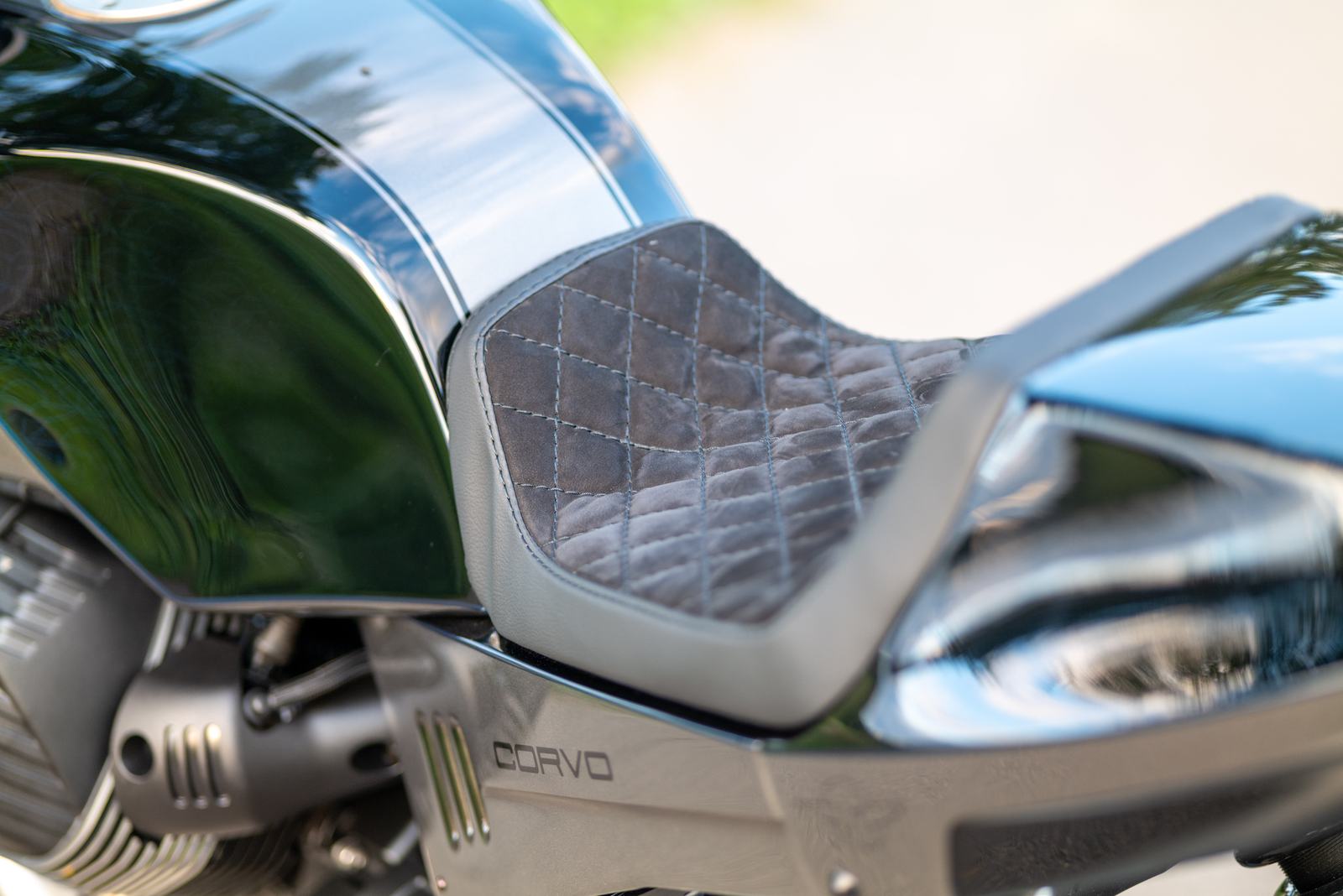
The biggest intervention concerns the silhouette. In design terms, little of the stock bodywork survived. Tank and side covers were created from scratch and handcrafted from aluminium by a specialist metalworker. Windscreen and tail were drawn into the new line.
The result looks far more compact and unified than the V85 that once lay beneath it. Above all, the machine now follows a single, consistent design idea.
And the reduction is not just visual: the finished Corvo weighs around 30 kilograms less than the stock motorcycle. For a road-ready conversion of this scale, that is more than a cosmetic diet.
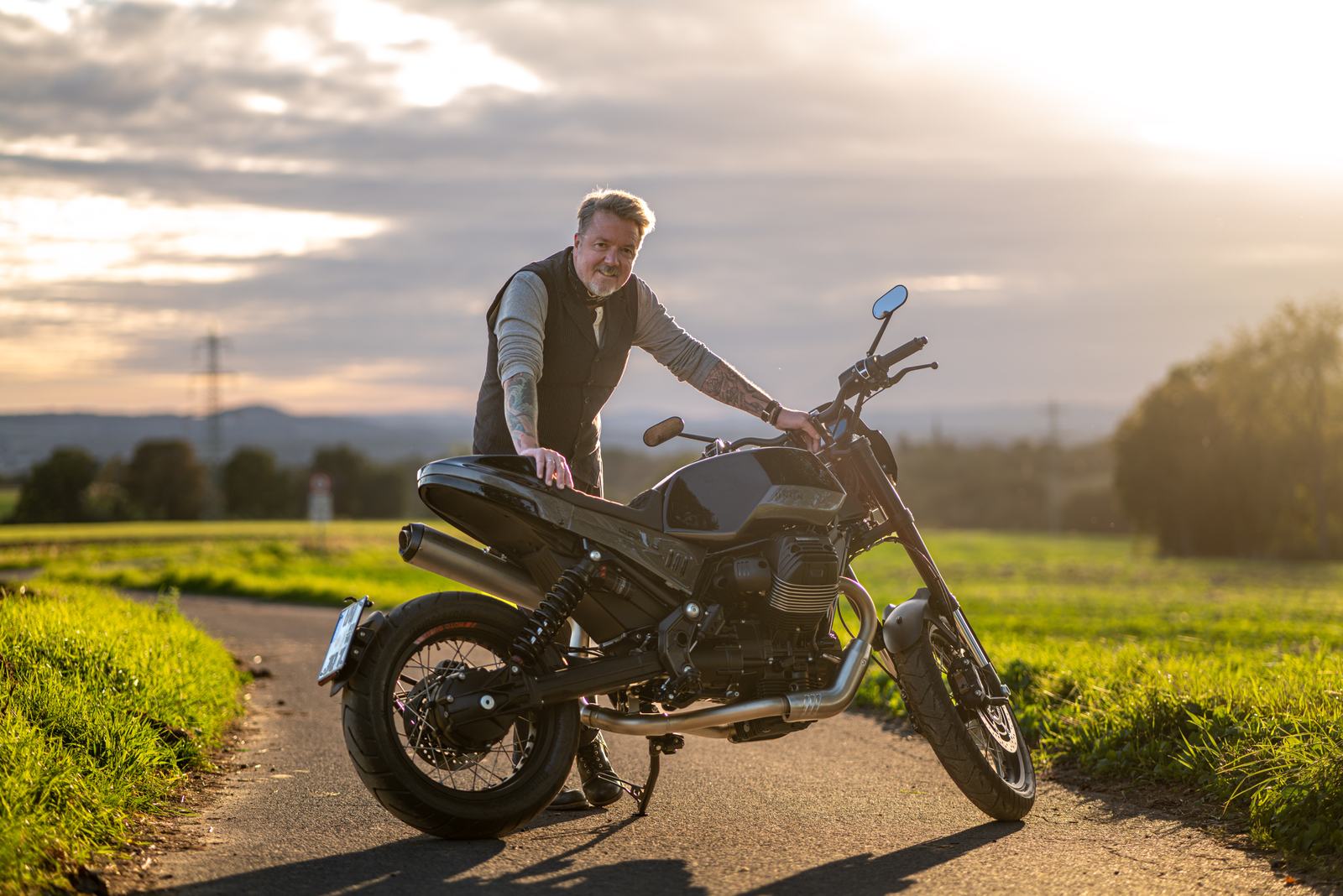
Jörg Reith, architect
He thinks in lines, surfaces and proportions. The Corvo is his design, from the first pencil stroke to the pattern in the paint. And it is his motorcycle.
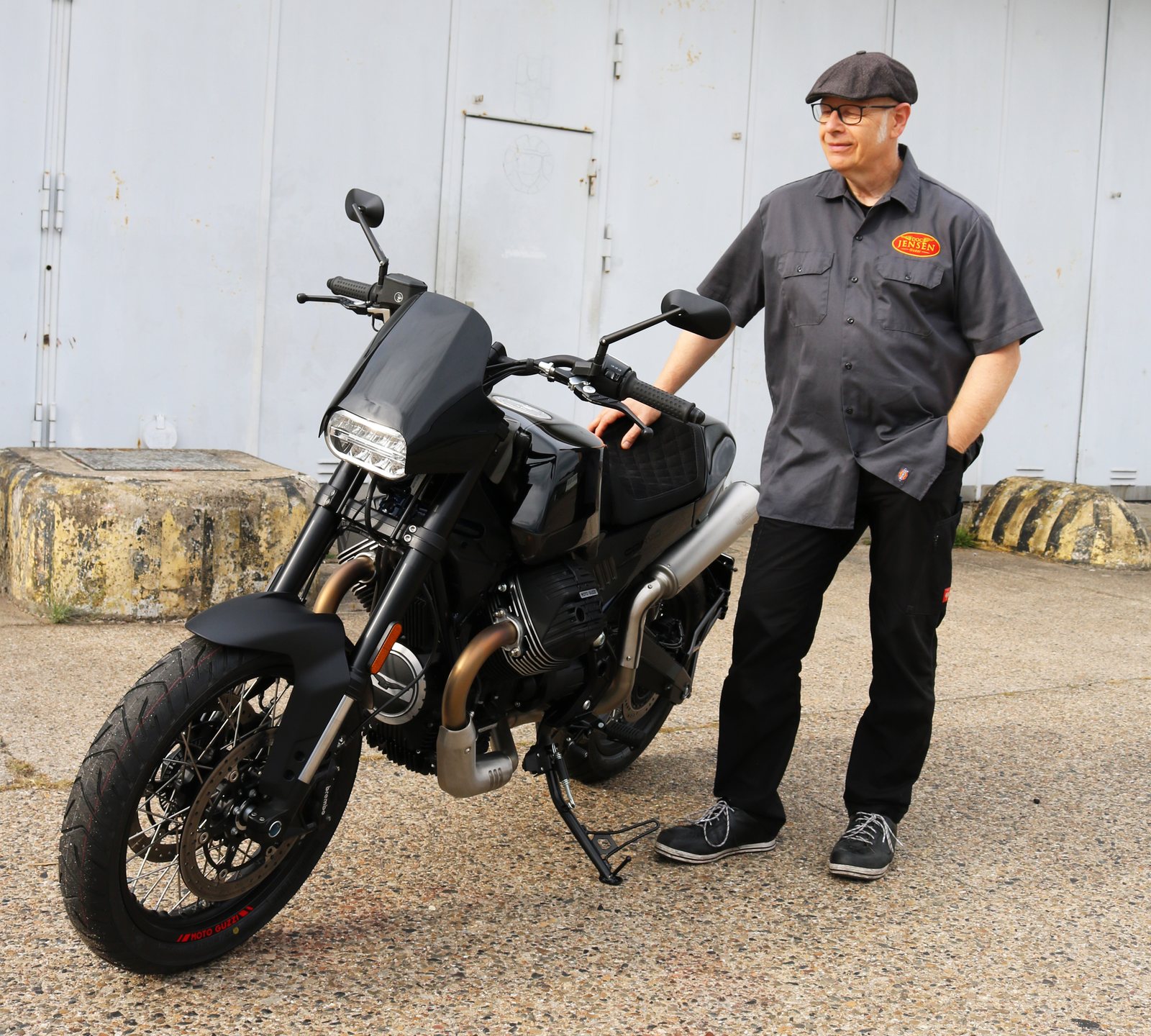
Jens Koch, “Doc Jensen”
Since 1999, Doc Jensen Motorrad in Schwarzenbek near Hamburg has been customising, tuning and restoring Moto Guzzis. Jens was responsible for the complete build, the technical execution and all the specialists involved. His name is on the tank for a reason.
doc-jensen.de ↗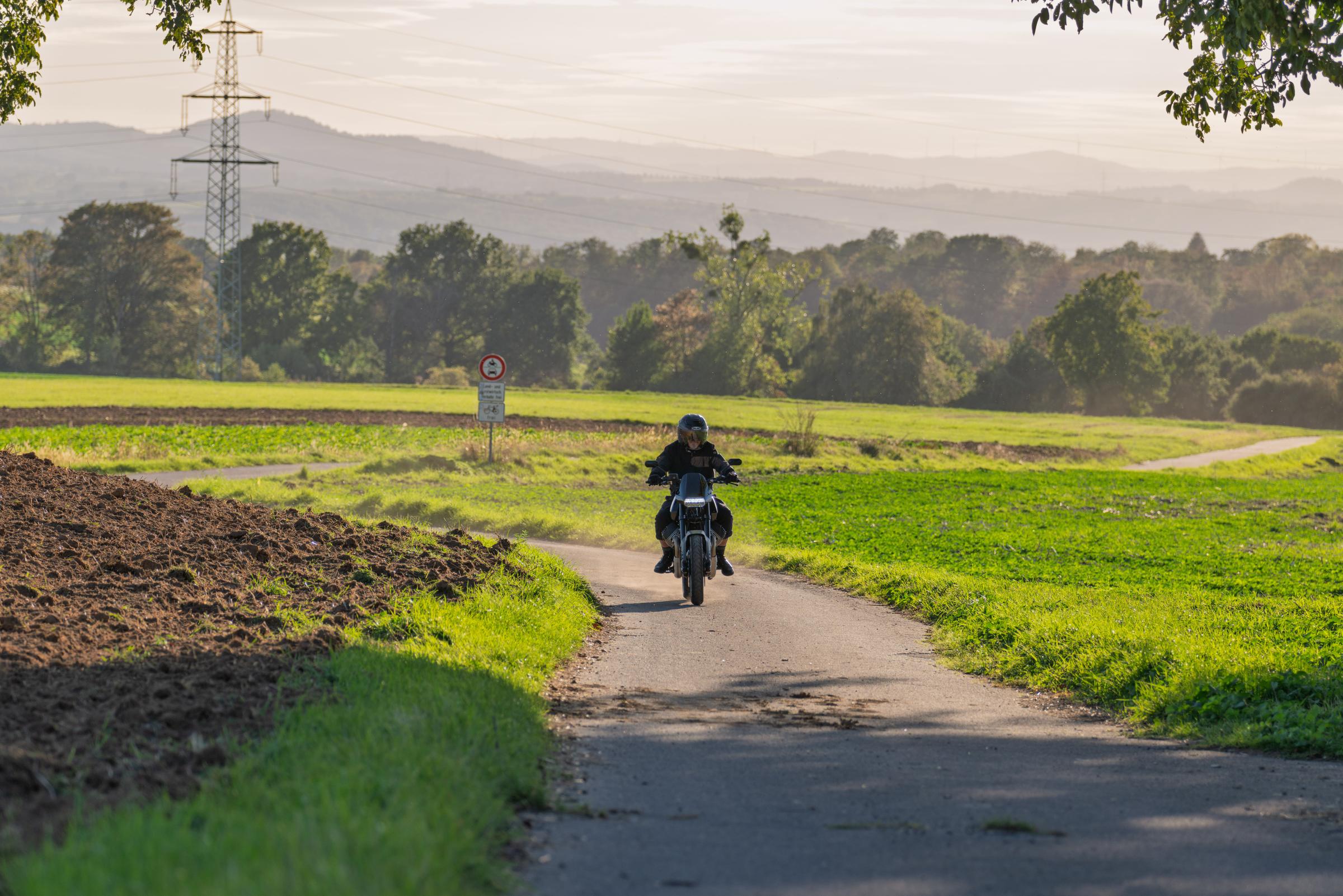
Not a showpiece.
For all its design rigour, the Corvo was never meant to end up in a display case. It is a motorcycle, and it gets ridden like one.
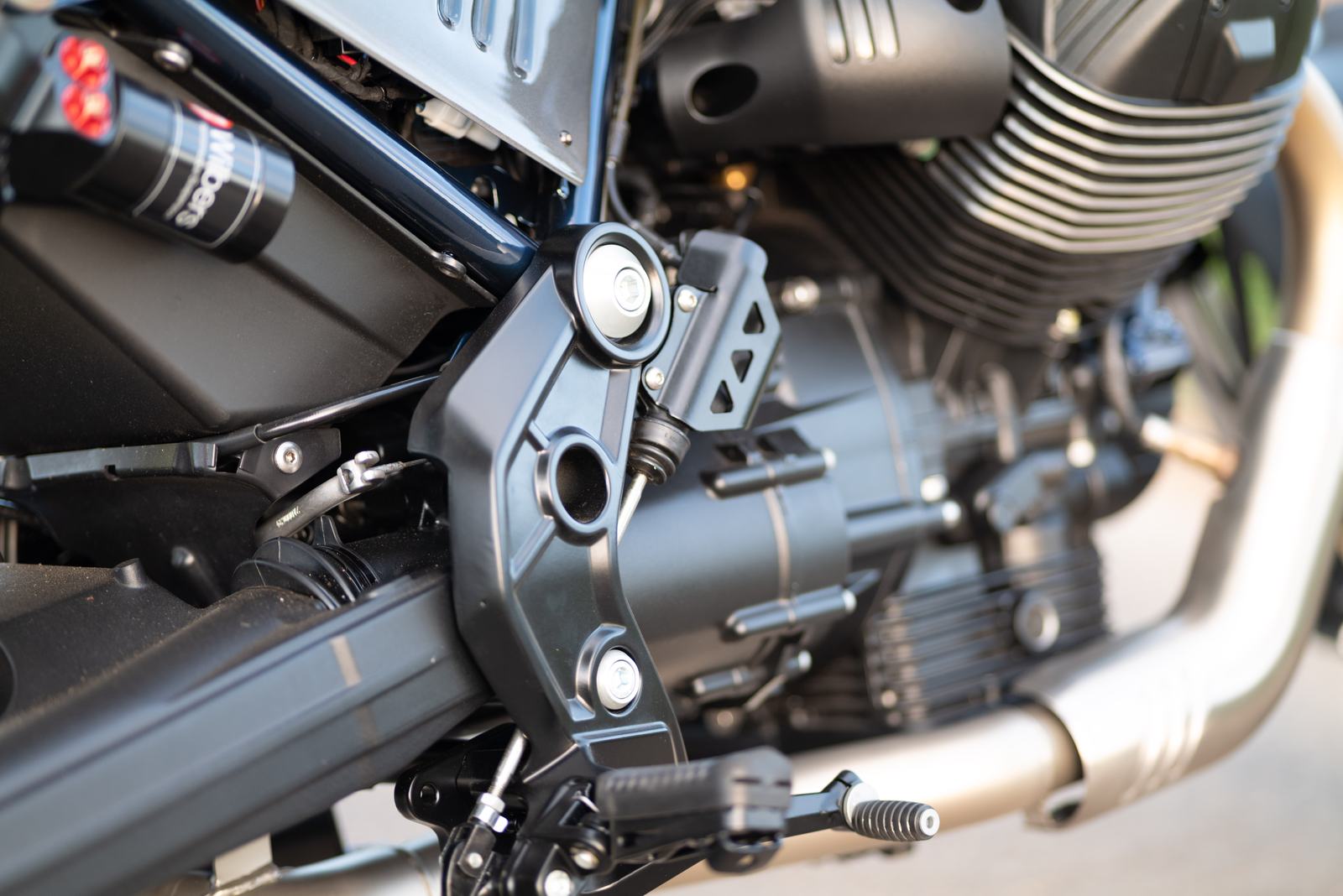
That is why it didn’t stop at the bodywork. The suspension comes from Wilbers: a new rear shock and new fork springs up front. Add to that a Mistral X-Trail Ice silencer, adapted by the factory specifically for the Corvo. The header system and heat shields were reinforced and matched to the build.
The Corvo has no wish to imitate an old Guzzi, nor to be a retro bike. It takes a modern Moto Guzzi and asks a different question.
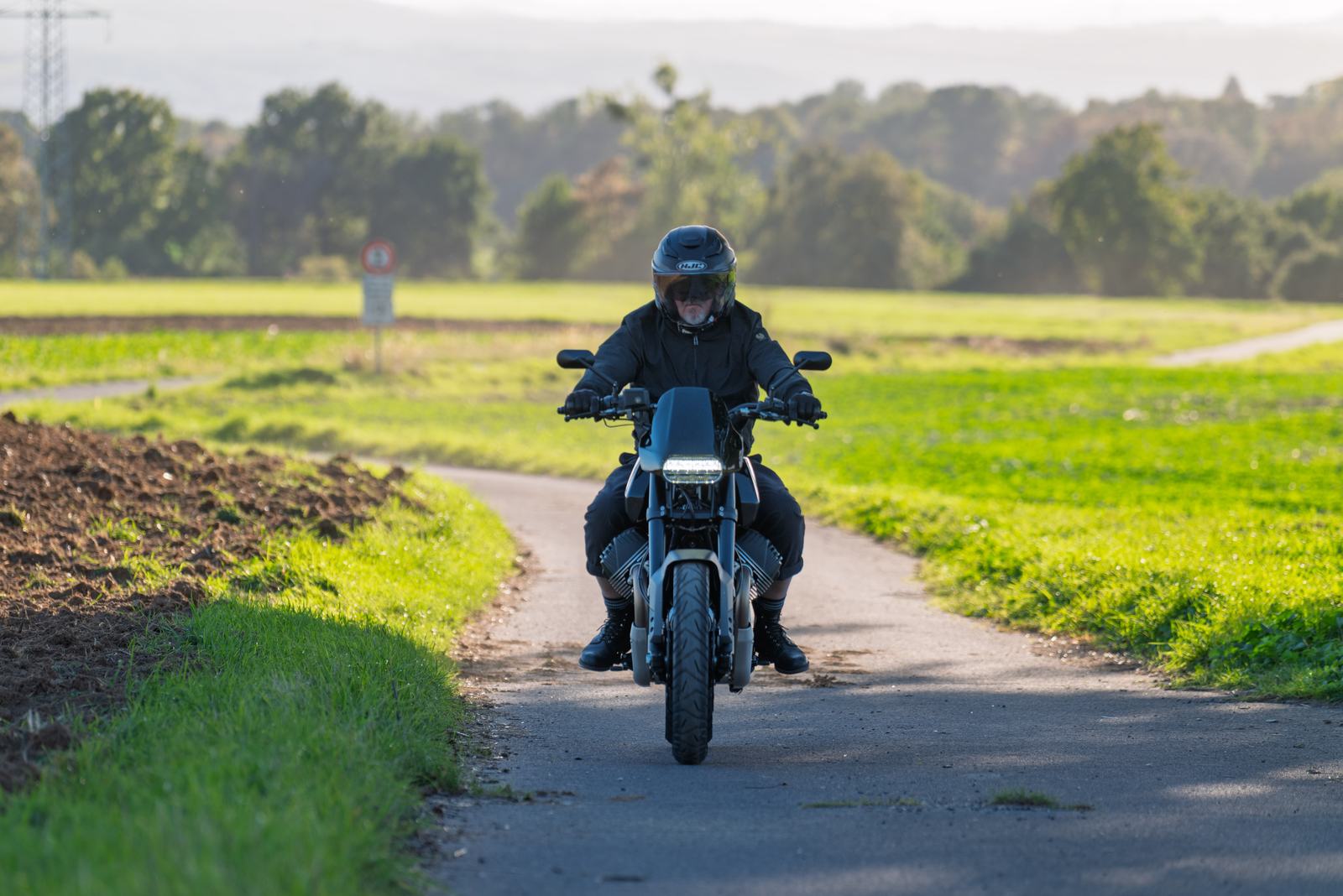
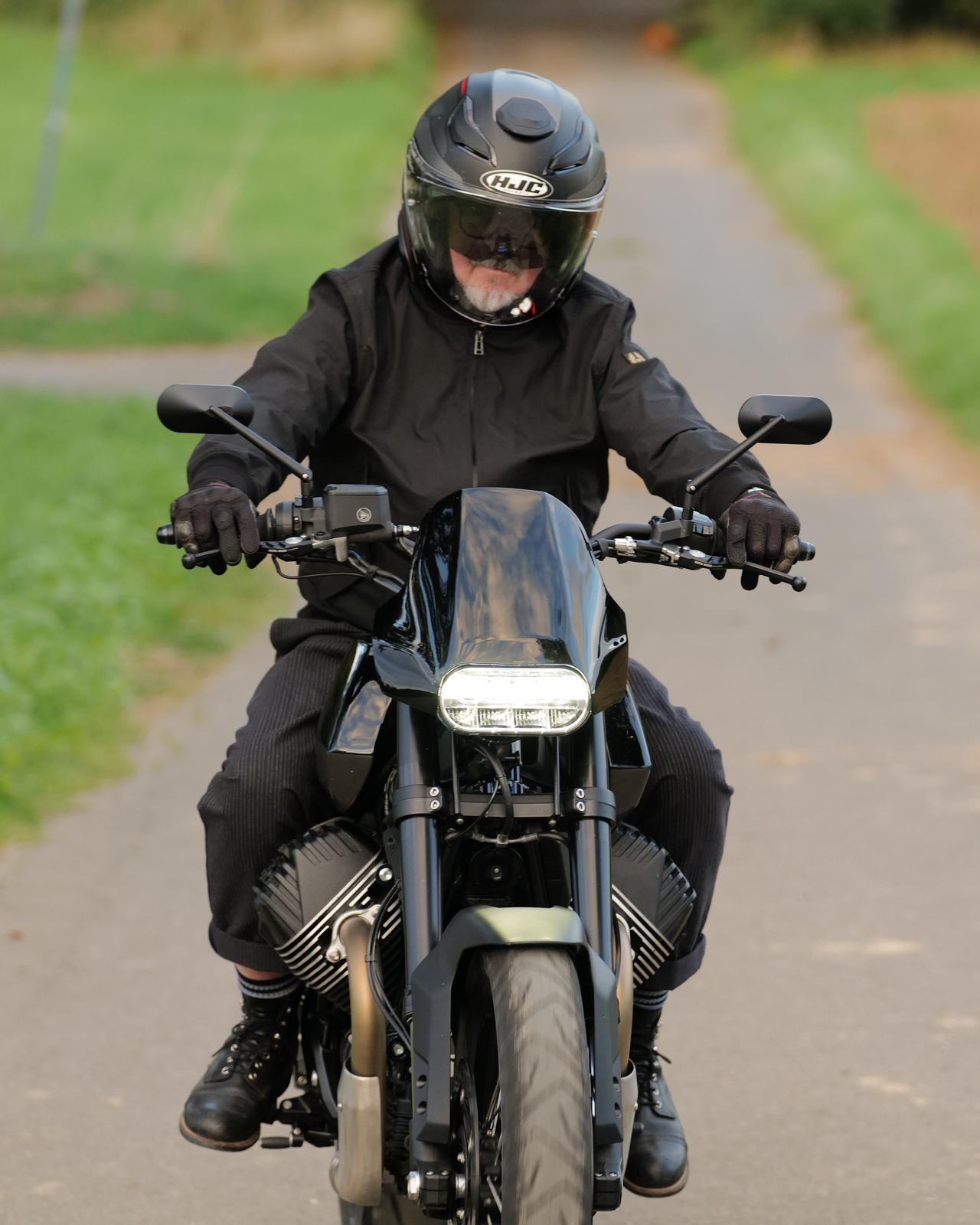
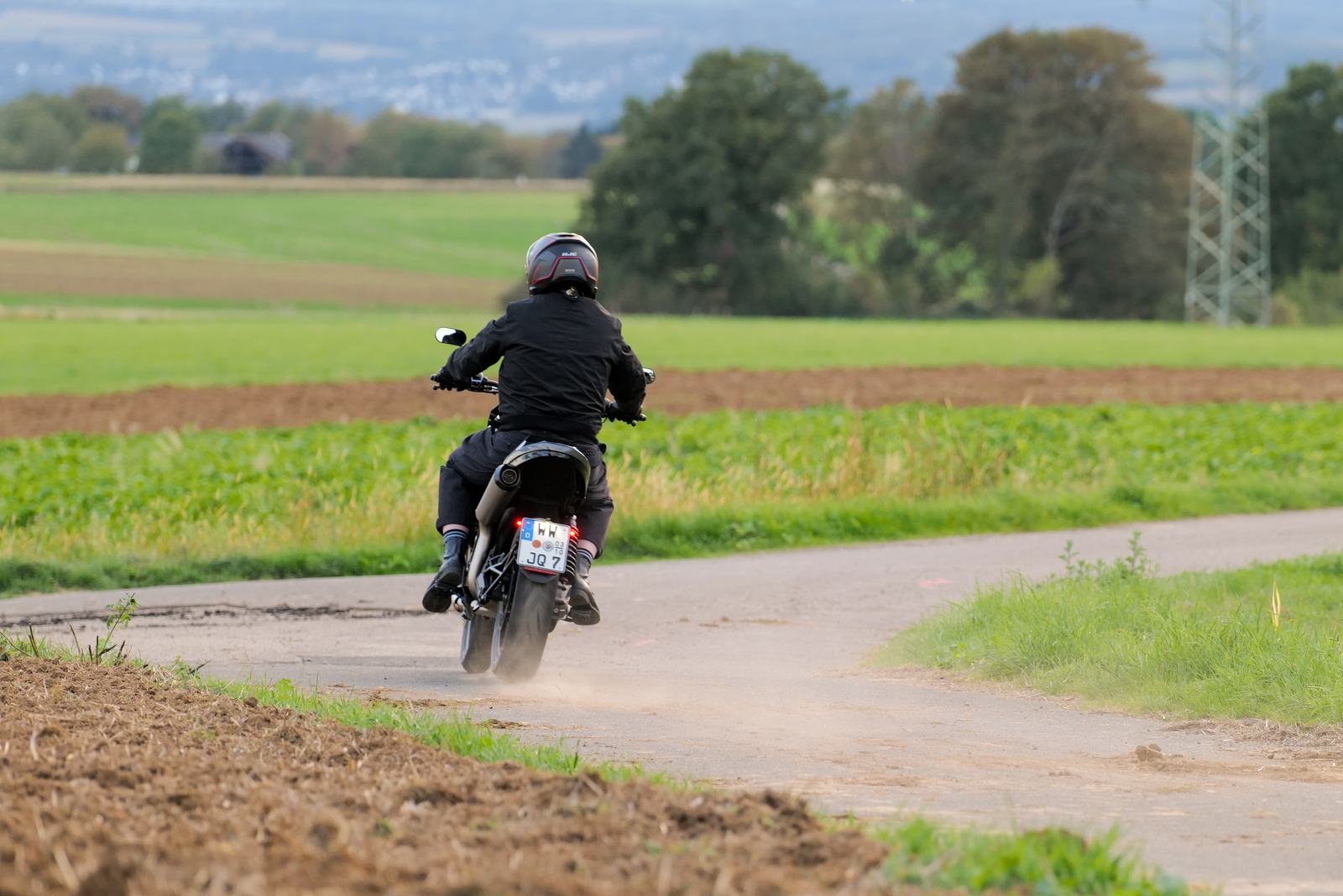
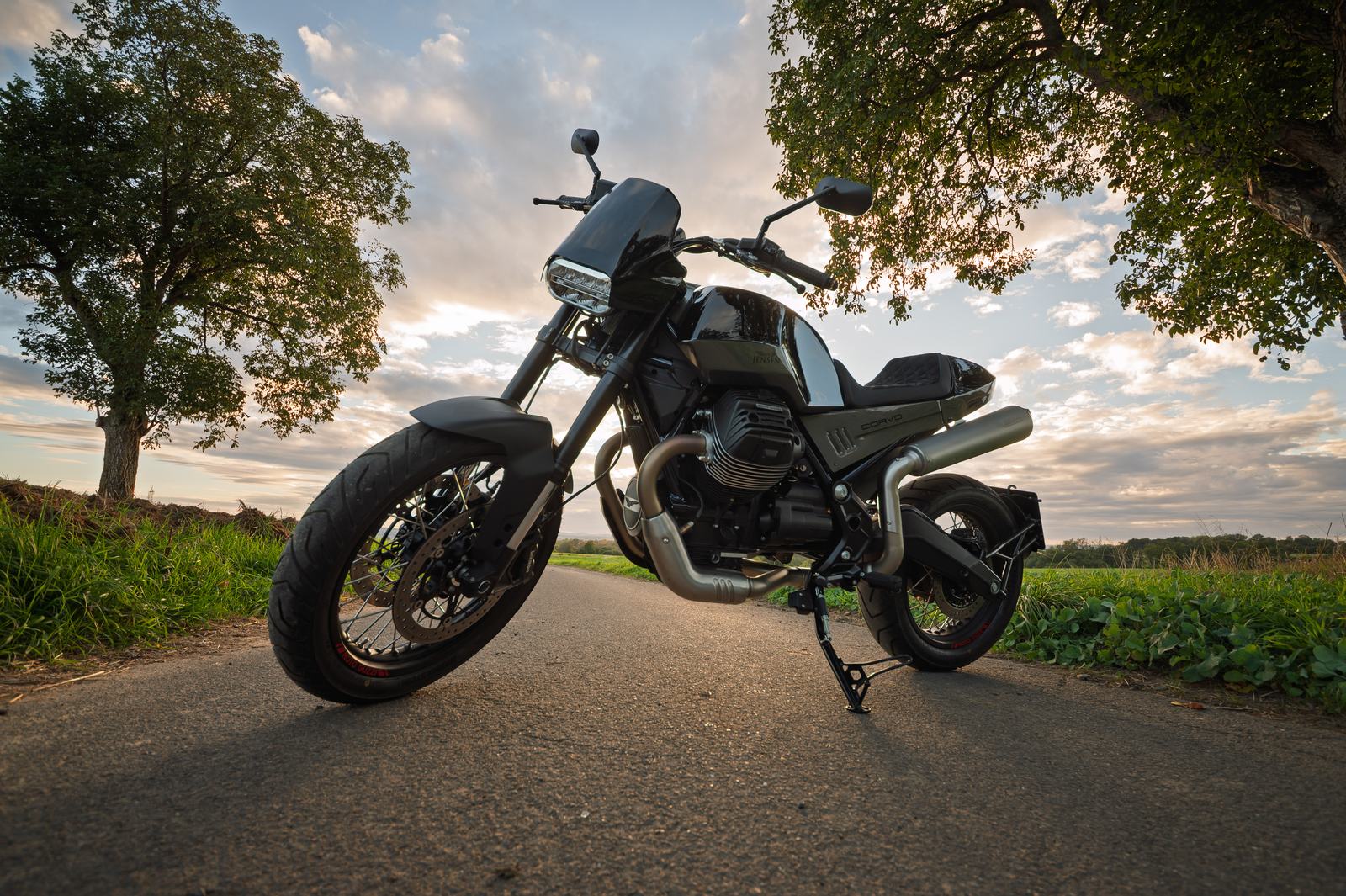
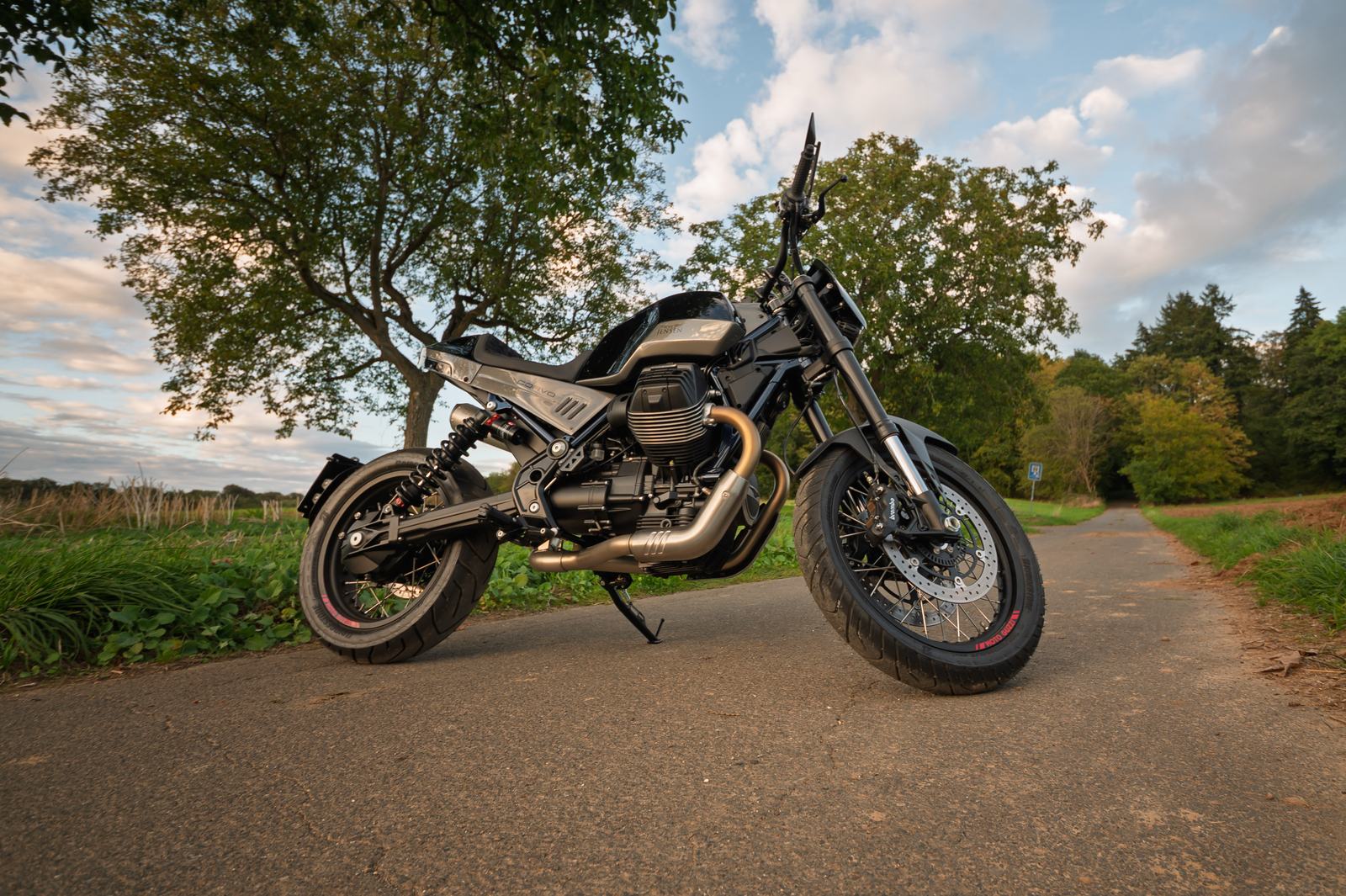
What would this motorcycle have looked like if an architect had drawn its lines from the very start?
Gallery
Photography: FREYGEIST · tap to enlargeFacts
The Corvo at a glance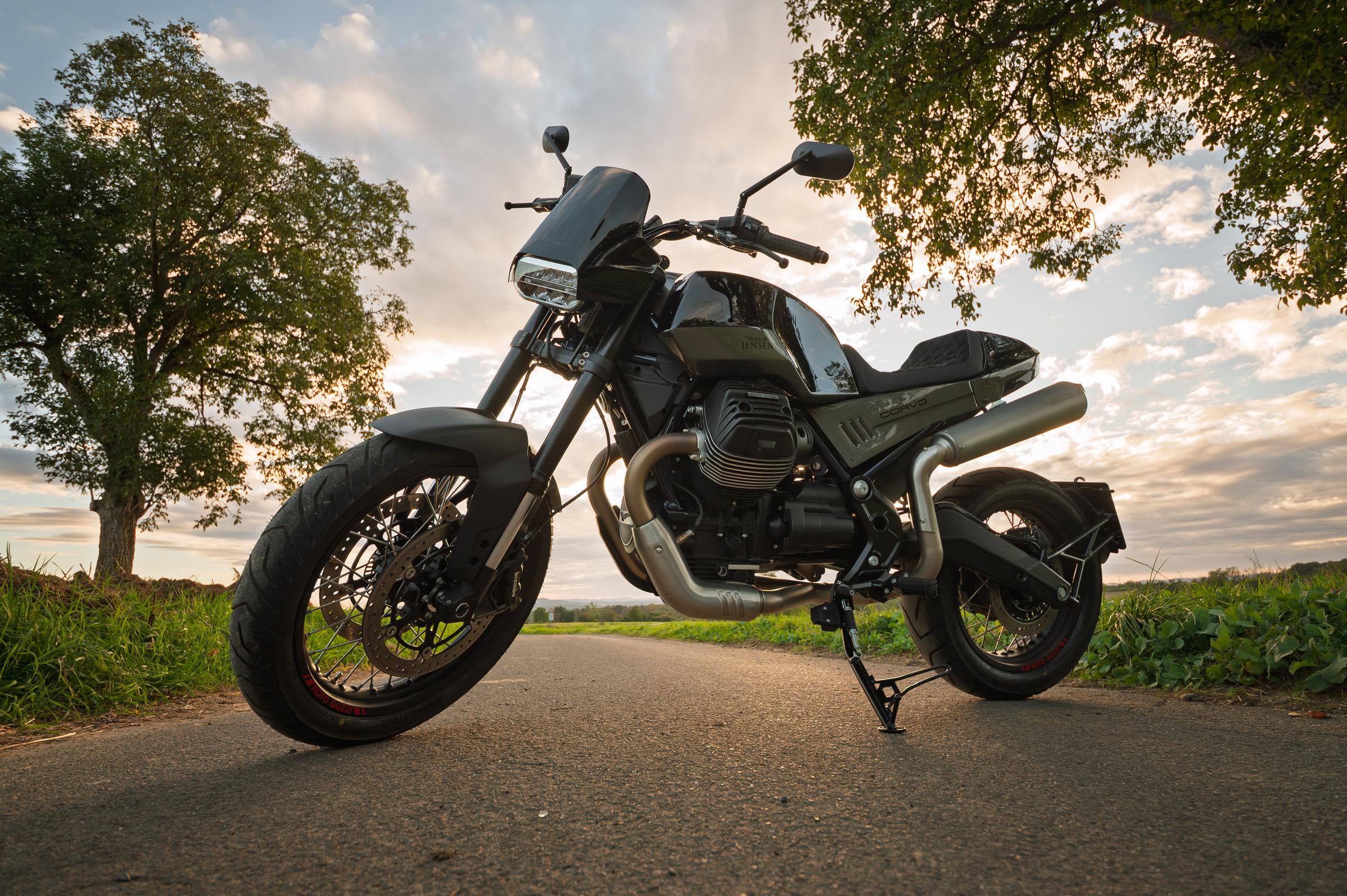 The machine
Interested in the Corvo?
Questions about the bike, or interested in the Corvo? Write directly to Jörg, its designer and owner.
 Photography
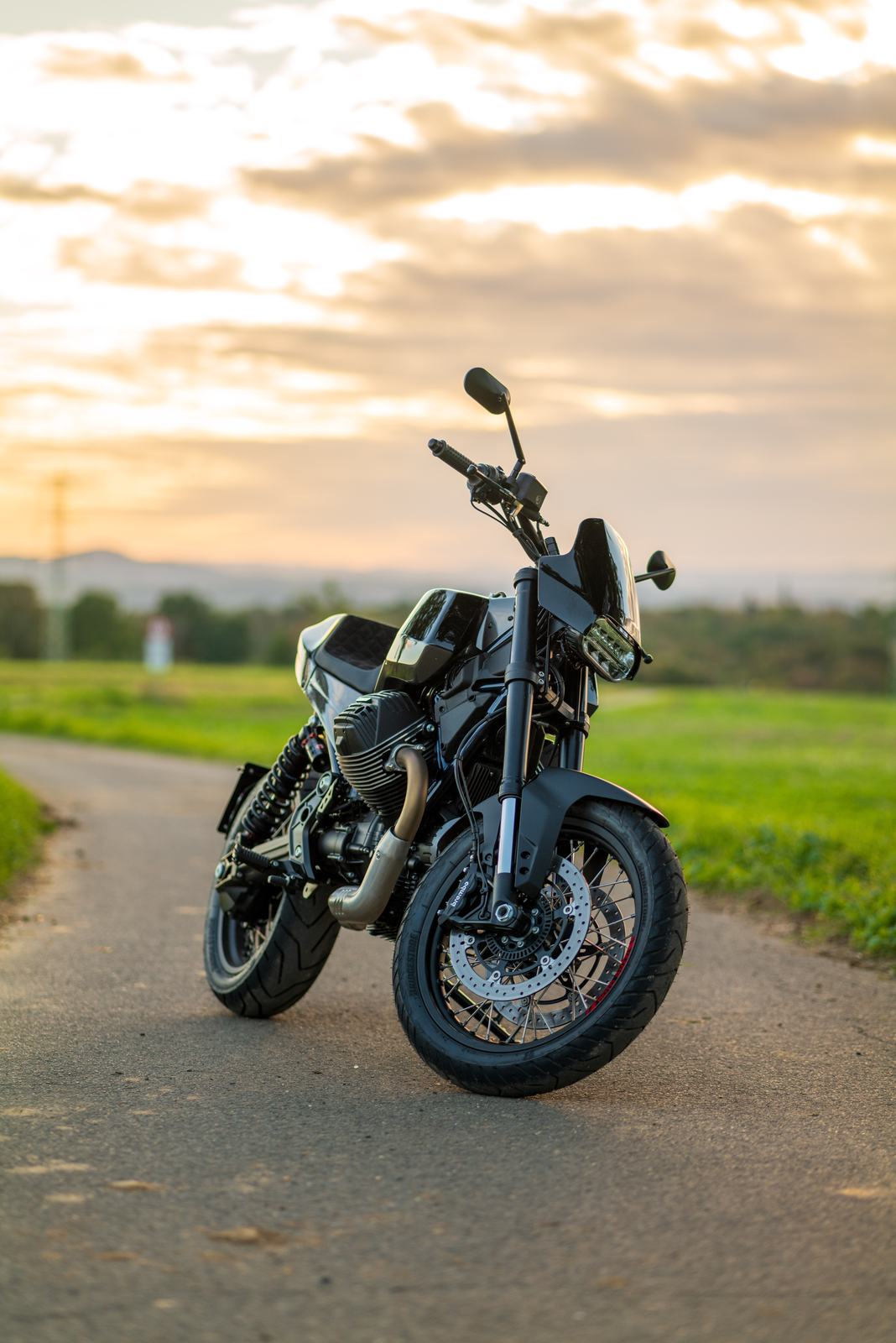
These images are by FREYGEIST.
Shot on a single evening in September, from the first good light to the low sun. If you want your project, your product or your company to be seen like this, let’s talk.